Monday, January 31, 2011

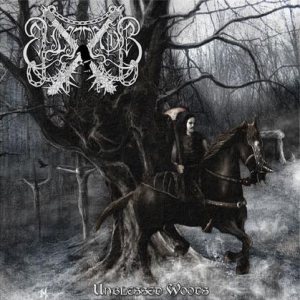
ELFFOR: "Unblessed Woods" Alternate Version

Unblessed Woods, Elffor’s fourth full-length dating back to 2006, has now received the usual betterment initiated by Northern Silence Productions and this is apparently wholly rerecorded and remastered version, in addition to the new artwork and a couple of bonus tracks. I’m not familiar with the original edition - or even with Elffor in general - so I have approached the record without any previous experience of this Spanish one-man project.

Warm, semi-clean and reverby production covers these heavily melodic and symphonic songs that span from 4 to 10 minutes (Unblessed Woods is a monster of an album, clocking at 75 minutes with the bonus tracks), songs with heavy doses of latter era Graveland and Summoning thrown therein. The driving forces of the album are different synth sounds -  such as choirs - and effects that are very up-front, backed up by stable (and pretty okay) drum programming and tremolo picking. Eöl delivers his screams in the quite traditional black metal way which fits well.

Without doubt, it’s atmosphere that Elffor seeks to create on the album, and definitely succeeds in that, evoking images of battlefields and landscapes in my head. But what comes to the actual compositions, there’s little to discover: none of the tracks really stand out from the mass of this beast, even if the music isn’t bad at all. It all flows nicely from a track to another, being an enjoyable ride in escapism that is occasionally very welcome amidst all the daily hassle.

Unblessed Woods is an album I’ll sometimes go back to, but doesn’t deliver anything out of the ordinary, hence I do consider albums like Oath Bound and Will Stronger Than Death much more successful. A worthwile effort if you’re not looking for proper innovation, but for a decent piece built of familiar elements.

2.5 / 5

Sunday, January 30, 2011

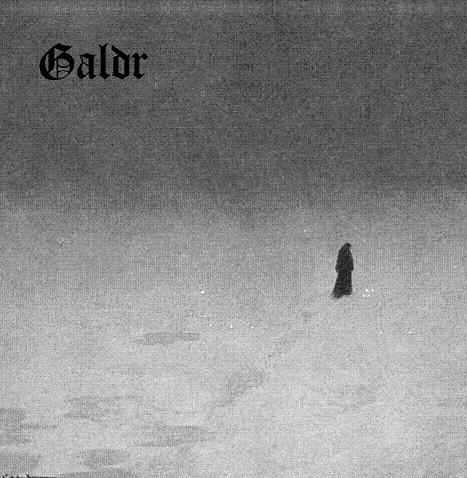
GALDR: "Galdr"

Production-wise, truly successful and unique albums are hard to come by, but heck how impressed I am of Galdr’s eponymous debut offering. As soon as the introduction ”Winter and Life” ends and ”Futhark” kicks in the black metal, I can’t stop smiling throughout the next thirty minutes.

The key here is the hazy analogue production as cold as a blizzard, fitting into the wintry, mysterious and fairly melancholic black metal perfectly. Everything sounds distant and hence very evocative, reminding me of Orrery’s only album. Compositions follow the roots of dark, mid-paced Burzum, including the screams and various synths that appear every now and then, but not without Galdr’s own touch.  Almost without exceptions, the tremolo-picked riffs are simply fantastic, enduring the repetition that they are given in these brooding atmospheric songs.

Without going into unnecessary details like ’that and that riff is amazing’, I can assure that Galdr is a great piece of atmospheric black metal, one of this year’s highlighs so far. It’s not for those who enjoy their black metal well-produced and downright aggressive; this album seems - according to me - rely heavily on frustration and sadness, yet not sounding like a depressive black metal album at all. Wholly recommended for those who enjoy their black metal in the Hvis lyset tar oss way.

4 / 5

BLUT AUS NORD: "The Mystical Beast of Rebellion" CD Reissue

Blut Aus Nord’s third full-length has been sold out for a good while now, so it was only logical to see Debemur Morti Productions reissuing the album, and not merely making an identical package in comparison to the original; in addition to the new artwork, a second disc of wholly new material is attached to the package as well, comprising 37 minutes of fresh material in the same vein as the original record.

The Mystical Beast of Rebellion was the beginning of Blut Aus Nord’s transformation into the dissonant, mechanized style that has been further explored in the band’s latter albums such as The Work Which Transforms God and MoRT. There’s only little trace left of the atmospheric and melodic style that was presented on the first two albums: The Mystical Beast of Rebellion is a stripped down, weird, meandering piece of black metal where the drums are more clearly programmed, almost incessantly playing a stable blast beat throughout the album - it’s not until ”Chapter V” when the pace slows down. What’s left of the first records’ ambient elements is mere quiet humming between the seven tracks.

The three new songs, all simply named ”Chapter 7”, venture further into slower-paced, dark and doomy soundscapes, production-wise close to the first disc’s material. The last of the three takes this pattern the furthest, being a really slow 19-minute monster. I see no reason for a Blut Aus Nord fan not to like these newest offerings. In my books, nothing ever tops Ultima Thulée out of all the band’s releases, but that is not to underrate this convulsing weirdness that this album offers - on both discs.

To truly grasp what’s going on in the confusing maze of The Mystical Beast of Rebellion, careful attention is needed. As a background music this easily turns into a meaningless mess with little worth. This is what makes Blut Aus Nord’s unique style challenging on the album, even more so on the following records. The Mystical Beast of Rebellion is the most logical place to start discovering the band’s second style as it’s probably the most accessible of the bunch. I’d go even as far as saying that this is an influential album in the sense that it was among the first black metal albums to properly incorporate this sinister atonality.

4 / 5

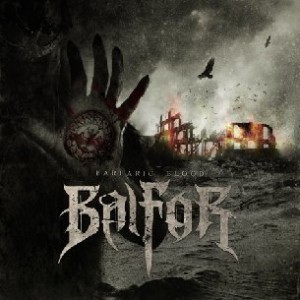
BALFOR: "Barbaric Blood"

Along the years, starting from the mid/late 1990s, Ukraine has provided lots of great atmospheric black metal laden with pagan influences and raw productions, but I guess this is one of the first times when I encounter modern, crystal clear, melodic black metal influenced by the likes of Dimmu Borgir and latter era Immortal. Apparently it’s not so uncommon anymore as it’s been less than a few weeks when I reviewed Quintessence Mystica’s debut album, and now it’s Balfor’s debut’s time.

Barbaric Blood mixes heavy rhythm sections (just hear all that death metal on ”Shadow of My Raven Wings” and ”Light’s Demise”) with more melodic and occasionally symphonic elements, and stays in balance this way fairly successfully. The powerful, though to my taste a tad overcompressed production makes the album sound massive, but also a little soulless - a common curse with metal albums that are so carefully played and tuned in the studio that they start losing all unpredictability and are made to be as safe and sound as possible.

The above applies to Barbaric Blood hundred percent, but we’re not dealing with a total failure record here because there are some good ideas among these 44 minutes, such as ”Behold My Hate!” and various other moments that rely on Balfor’s (fittingly said) most barbaric side. Thanks to these few moments that stand above mediocrity, I’m able to rank Barbaric Blood as a 2.5 star album, but in truth it’s not far from a lower score. Barbaric Blood plays with too safe elements to trigger any proper interest in me.

This could be an ideal album for someone with a mainstream metal background getting into black metal, but then again, why not to just direct him/her towards the essential black metal records instead of a polished album that doesn’t have so much in common with the originals? In Ukraine’s standards, this might not be the most explored territory yet, but a territory that would be perhaps better to leave unexplored anyways.

2.5 / 5
Thursday, January 27, 2011

NACHTVORST: "Stills"

From the outside, Nachtvorst first major release Stills didn’t trigger any big interest in me to check it out, but luckily I did because Stills offers some very solid black / doom metal that, for some unknown reason, has remained rather obscure since its release a few years back.

Maybe the obscurity has something to do with the fact that Stills isn’t totally for underground cults and neither for those with a mainstream taste. The album balances somewhere between, providing five generally long songs of gloomy melancholy that present a lot of interesting melodies throughout the 48 minutes. The album is produced rather professionally, and the massive sound is put to its best use on the short instrumental ”Murmurs” that is so damn sludgy and heavy that it’s surely to have an impact on any listener, almost at least.

Excluding that track, Nachtvorst focuses on more general mid-tempo wanderings that occasionally turn into faster black metal sections. Recurring melodies appear smoothly within tracks, never sounding annoyingly repetitive. Some breakdown moments of more calmful sounds are presented in the tracks too to make sure the album never sounds boring. During the doomiest moments, vocalist Erghal is very reminiscent of Astaroth from Raventale and very similar to Mikko Kotamaki (Swallow the Sun, Alghazanth) during the higher-pitched screams.

Nachtvorst’s debut offering took me by surprise: it’s not often you come across this grabbing and well performed black / doom metal fusion. Even if not doing anything outstandingly innovative here, Stills deserves more recognition and will get more plays at least in my player from now on.

3.5 / 5

Wednesday, January 26, 2011

PATRIA: "Gloria Nox Aeterna"

Looking at Gloria Nox Aeterna’s black & white cover art and hearing the first sounds of shrilling coldness on this recent EP release, my first idea of Patria’s geographical origin was certainly not Brazil, but that is the case here. Delivering four new songs plus an obscure demo from 2008 and a few videoclips, this southern 2-piece horde convinces me with its simple style - reminiscent of the 90s classics - that is still somehow refreshing.

The secret lies in the guitarwork of Mantus: just the way a band like Mgła knows how to craft authentic riffs out of simple underground black metal ingredients, Mantus seems to have his own touch to making convincing riffs and melodies while still strongly retaining to the old school values and spirit. So we’re clearly not dealing with a simple Darkthrone clone when it comes to Gloria Nox Aeterna.

Sound-wise, the EP is harsh and dead cold, not quite something an audiophile could ever digest, but it’s more than fitting to the style Patria presents here. Three of the four new songs focus mostly on noisy and aggressive output in which Triumphsword’s upfront raspy screams do their job admirably. Some passages involving clean guitar sound are implemented to ”Shattered Silence” and it works well, and there’s also the droning instrumental title track that might not be as fierce as the other songs but even more oppressive in atmosphere.

Hills of Mist
, the 2-track demo that is included to the EP as a bonus, begins with an ominous introduction ”The Origin” that is followed by the eponymous ”Hills of Mist”, an even more traditional song where the influence of e.g. Darkthrone shines through more clearly than on the newer tracks. It’s fortunate that Patria has evolved from its demo days because the worship of the influential bands is a tad too clear on the demo, but it’s nonetheless an interesting glance to Patria’s first steps.

Gloria Nox Aeterna inspires me to keep my eyes on the band that most surely has potential. I enjoy the tracks - especially the new ones - so that the EP is to receive more listens in the future. I’m not the biggest lover of EPs and that might reflect my rating: had this been a full-length of same quality minus the demo tracks, at least a half star more could be added to the final score. Now I’m really looking forward to the upcoming album this year.

3 / 5

WOLFSSCHREI: "The Unknown Spectre of Evil"

Being a fan of Erhabenheit, I was more than willing to hear what this duo has to offer on their other project Wolfsschrei, and The Unknown Spectre of Evil turned out to be a fairly worthy EP of aggressive and relentless black metal, even with the flaws that easily occur within this style.

First and foremost, Wolfsschrei plays fast. Hell, this is rapid! The thin production - that could do better with some more punch, by the way - is fitting considering the fast-paced nature of the music. Guitars are in the highest role, delivering those evil chords and one-string saw buzzing, but points have to be given also to the session drummer from Sõjaruun: without his powerful battering The Unknown Spectre of Evil could lack the necessary energy. Taaken’s vocals are worth mentioning too, his not-so-raspy yet convincing screams are fittingly full of anguish and hate.

The main glitch of the EP is the actual compositions that, no matter how killing, don’t differ much from each other. Luckily The Unknown Spectre of Evil runs just for less than 24 minutes, which is about the maximum length for this style that, instead of any proper variation, just rampages on throughout. ”May Death Be Your Purpose” does bring some melody and even a slight sense of calmness to the music in the latter half, belonging to the EP’s standout moments. Here’s to hoping that in the future Wolfsschrei composes more in this vein because it seems to work well.

Keeping in mind how many times this kind of music has been done already, it’s hard to rate The Unknown Spectre of Evil very highly. There’s no sign of any remarkably brilliant riffs, but I do think the intense, energetic style Wolfsschrei plays here is enough convincing to save the EP from falling to the category of uninteresting black metal. If you want your black metal relentlessly fast and still natural sounding, The Unknown Spectre of Evil might be your thing.

2.5 / 5
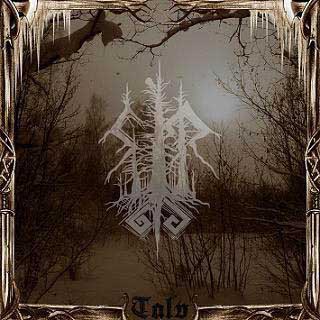
SÕJARUUN: "Talv"

My knowledge of Estonian black metal is pretty much limited to merely knowing that there’s a band named Loits, so when Sõjaruun came to my attention, I was happy to get to discover what this country really has to offer, and Talv - the young band’s fourth release already - surprised me only positively. I find it somewhat misleading to label this as pagan black metal, because from the core we’re dealing with well-done black metal that shifts from emotional tremolo picking to simple but strong power chord riffage. If only a few sections from the opening track ”Kui kõlab sõjasarve hüüd!” were removed - that incorporate some unusual folk instruments to the metal - a more fitting term would be just atmospheric black metal or something along those lines.

The production here is golden to my ears: it’s tight and warm and allows every instrument to be heard well enough. The drum performance of Thon is top-notch and there’s nothing to complain about the other instruments either - only as an off-topic matter I could mention the Estonian language that sounds a little funny to a Finn, as the languages are close to each other but still different, making Estonian always sound a little amusing, no matter how well even Oliver delivers his mid-range screams on this record. Despite the short running time of 24 minutes, the music stays innovative and introduces new ideas throughout: ”Jäine haud” has a long clean guitar intro to it, ”Surmkülmast mullast” focuses mostly on the aggressive side of the band and the instrumental title track ends the album in rather epic landscapes.

I wouldn’t say that Talv is the most perfect EP out there, but I do find it successful: it’s an enjoyable record without any major flaws that would distract me from it. From here onwards I would hope for a little more grabbing compositions on the future records because right now Talv doesn’t rise above the line of being ’pretty good’ - which, however, isn’t a bad score when it comes to nowadays’ black metal.

3 / 5

FEN: "Epoch"

So here it is - after the successful 2009 album The Malediction Fields, Fen returns with Epoch and shows no signs of decline; instead, they have crafted an over hour long journey that fuses elements of post-rock now perhaps more dominantly with the atmospheric nature themed black metal, and does it with great success. Once again. Epoch does take a lot time to open, though. I consciously avoided writing about the album for a long time, knowing that the first few listens - during which the album didn’t indeed sound very remarkable at all - wouldn’t be anywhere near the amount of spins that a band like Fen requires to open to its full glory.

What comes to Epoch’s production and overall atmosphere, it’s very reminiscent of the debut, sounding as distant and foggy, with an inclination to deep blue watery landscapes as the cover art suggests. Unusual time signatures are occasionally implemented to the music as well, but never in a way that would kill the hazy, dream-like mood. Enough repetition is given to such patterns, making them sound more like shamanistic trances building up to fantastic climaxes (hear the violin fuelled ending of the 11-minute ”Carrier of Echoes”) than anything purposely technical.

The way Fen manages to balance between bright sounding fragile post-rock passages and energetic black metal blast beats is still admirable. This becomes clear already in the beginning when the calmful title track’s transition to the heavier ”Ghosts of the Flood” seems to happen naturally without any annoyingly sudden changes in dynamics or sound levels. Every single track on the album seems to be of high value, always showing something new on each spin, so I think it’s unnecessary to start naming any particular highlight moments. If you’ve enjoyed Fen’s earlier material, Epoch is surely to grab your attention as well. So far the best 2011 album I’ve heard. Enough said. 

4.5 / 5

Monday, January 24, 2011

HAMMERGOAT: "Regeneration Through Depopulation..."

As the artwork - morbid black & white imagery with red texts - imply, Regeneration Through Depopulation... is bestial black / death metal to the bone, no compromises whatsoever: influences of e.g. Blasphemy and Hellhammer shine through in these raw, ugly pieces of filthiness.  Although Hammergoat’s debut offering is certainly not the most rememberable album in this field, it succeeds in creating a murderous atmosphere, and that alone gives the album enough merits in my books.

And what best, Regeneration Through Population... is a consistent whole: it runs for just 30 minutes which is a great - and almost maximum - length for this kind of savage metal that doesn’t show much signs of mercy. Somewhat surprisingly, the songs run for averagely long, for example ”The Aftermath of War” is close to the 7-minute mark and still holds my attention throughout. Tempos vary nicely from mid-tempo sections à la Archgoat to faster bursts. A Sarcófago cover of ”The Black Vomit” is added to the whole as well, so I believe you are very aware already what this album offers. Production-wise, Hammergoat manages to create a cavernous sound even if it doesn’t sound so filled with reverb, no, this sounds more natural than just a lame effect in the mixing production. So don’t expect to hear as deep and abyssal sound as Wrathprayer and Nocturnal Blood provide, this is somewhat muddier and rehearsal-like.

It’s hard to recommend Regeneration Through Depopulation... to anyone else than the old school worshippers of the Ross Bay Cult, other people will most likely consider this being really unoriginal - which it ultimately is but that doesn’t necessarily hinder from liking it - and bland. Of all the ’Goats out there, I would surely choose Archgoat over Hammergoat when I’m up for some ass-kicking darkness, but Regeneration Through Depopulation... is still a worthy investment to attach to your old school metal shelves. Heck, to me the album sounds even fresh right now as I’ve been surrounded by a dozen of post-rock experimental black metal fusion albums lately. 

3 / 5

Sunday, January 23, 2011

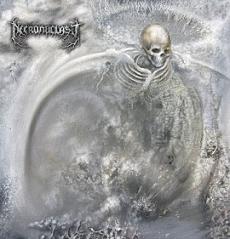
NECRONOCLAST: "Ashes"

Since bands like Deathspell Omega and Blut Aus Nord showed the way how to incorporate dead cold dissonant melodies to black metal, there’s been nothing but a flood of bands utilizing similar atonal melodies and chord progressions. And why not, after all it fits very well to the concept of malicious, twisted black metal. But how easy it is, then, to make a truly successful release by just plucking those sinister melodies with heavy distortion? The lately reviewed Evangelivm lacked the spark of originality, and when it comes to Necronoclast’s latest offering Ashes, I’m not entirely convinced either.

Because, ultimately, Ashes lacks that originality too. These 45 minutes wander nicely in middle or fast tempos, a mysterious atmosphere in presence throughout. The drums are very visibly programmed, creating a mechanized and industrial feel to the album, not unlike Blut Aus Nord, but also not unlike sounding a little cheap because I’m not sure if this industrial feeling is made consciously or couldn’t he just find a real drummer. However it is, the result sounds fairly bland. To mention one more negative side, the mid-range screams sound somewhat powerless and far from the cold atmosphere the instrumentation creates.

Now that the usual nagging is done, I can say that Ashes is still a decent piece that just could do a lot better. When playing this album, it doesn’t harass me at all but the same time it does very little to me - hence reminding me indeed of the recent encounter with Evangelivm’s debut. Naming standout moments is hard but I could mention ”Kajicnicke Saty” due to its guitar solo in the end which works rather nicely. All in all, Ashes is an okay album that I would keep in my shelves for an occasional listen, but remember not to expect anything truly innovative from this.

2.5 / 5

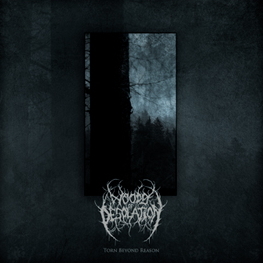
WOODS OF DESOLATION: "Torn Beyond Reason"

Like I mentioned in my recent review of Woods of Desolation’s EP release Sorh, I had my doubts about the upcoming second full-length that was said to change the direction a little and cleanse the sound. And now that I’ve heard Torn Beyond Reason, I can’t but confirm those claims. Whereas the band’s previous material leaned more heavily on obscure and nature-like foggy atmosphere, Torn Beyond Reason is basically Austere’s To Lay Like Old Ashes part two: rather well produced majestic depressive black metal with some post-rock influences.

I can’t stress enough how much this is identical to the previously mentioned band and album, and no surprise there, knowing how closely these groups are intertwined: from the impressive howls and screams (and clean vocals of ”Somehow...”) to the tight battering and - most importantly - the tremolo picked melodies full of sorrow, everything is done the same way throughout the 38 minutes. A perfect length for the album, by the way. Some differences do occur, though: the three-minute interlude ”November” is a little surprise here with its hopeful acoustic strumming that builds up to include the rock instrumentation, not quite what you would expect from the song title and from a Woods of Desolation album - perhaps more likely from Anathema’s last year’s offering.

Do I necessarily need another To Lay Like Old Ashes if the differences are few and far between? Well, Torn Beyond Reason does offer some brilliant moments, such as the title track and ”Darker Days” that provide some truly heart-rending melodies, and also the 9-minute centerpiece ”The Inevitable End” starts to show signs of ingenuity after repeated listens. Thanks to these best moments of the album - that occur just about enough often - I could say yes, Torn Beyond Reason is a worthy album and it would be a shame to rate it poorly.

In terms of musicianship and production, I’m sure this album is a step forward for Woods of Desolation’s members, but for me it’s one step back from evolving into something more unique; instead, Torn Beyond Reason follows the current trends a tad too closely and hence consists of maybe too unsurprising elements. In a way, it’s not a bad thing when it’s done this convincingly, but on the other hand these similar melodies don’t have the same impact anymore because most of them have been heard already. Once again I’m interested to hear how the band evolves from here: if another album like this is to be expected, I’m not sure will I be that interested anymore.

3.5 / 5

Thursday, January 20, 2011

HERETOIR: "Heretoir"

How ever generic it’s to fuse post-rock and shoegaze influences to black metal by now, the recent release batch by Northern Silence Productions offered a great deal of worthwile releases from this certain field, a field that blossoms thanks to a few great French innovators that triggered the flood of a thousand copycats. Much to Heretoir’s good, their eponymous debut album doesn’t follow those footsteps too closely, albeit the influence of Alcest, Agalloch and Amesoeurs shines through as bright as daylight. These fifty minutes are laden with delicate melodies and wide reverb - the wistful atmosphere is maintained successfully throughout the album even if there are some fairly weaker links in the whole, like ”To Follow the Sun” and the self-titled ending track that quite don’t rise to the level of the other sonorous tracks.

A lot of space has been given to purely instrumental passages, like e.g. ”Retreat to Hibernate” - one of the highlight tracks - imply, starting with despondent chords and turning into a rather odd and original ending, like the protagonist of this album - yes, this album flows smoothly as a consistent journey - was starting to lose his mind. A few ambient interludes are in present too, luckily not dominating with too long running times, no, they are swift moments before it’s time to bring the usual instrumentation back to the game. It’s not until ”Weltschmerz” when the black metal roots are truly visible: the song is filled with blastbeats and tremolo guitarwork, this track also belonging to one of the standout pieces on the album - not to forget the following ”Graue Bauten” and its ethereal clean vocals in the background, the more usual black metal screams on top.

Something to complain about resides in the drums that at times sound very programmed and at times real and detailed - just listen to that fine groove on the beginning of ”Retreat to Hibernate”. However it is, the drums could do better with a more realistic sound overall, as the somewhat mechanized sound doesn’t fit to the whole picture of atmospheric droning music so well. Other than that, there’s not much anything else to say when it comes to proper negative sides. No matter how unoriginal Heretoir’s debut is from the core, I find myself enjoying it greatly. Removing the few glitches and bringing more of those original moments to the music would make this at least a four star album, but for now I have to settle to a slightly ’worse’ rating. Definitely a recommendable album for those who enjoy the bands mentioned in the first paragraph.

3.5 / 5

Wednesday, January 19, 2011

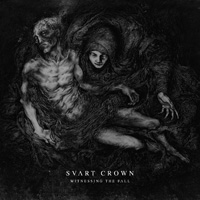
SVART CROWN: "Witnessing the Fall"

Blending together death and black metal, Svart Crown doesn’t break any boundaries on their sophomore major effort Witnessing the Fall, but nonetheless does its job - of bringing forth some utterly evil audial chaos - rather convincingly. While the band mostly focuses on heavy and averagely technical rhythmic patterns - both riff and drum-wise - not to forget the death metal growls, there’s a lot of religious black metal atonality going on in the melody department as well, making a sweet, albeit not entirely original, 46-minute whole of modern extreme metal.

What comes to individual songs on Witnessing the Fall, the album suffers from being a little generic: had this album been released in 2000 instead of 2010, I’m sure it would have triggered the interest of a wider audience, being on the quality level of e.g. Averse Sefira. But now, compared to all the other albums in the field (like the just recently reviewed Erebus by the Polish group Hate), Witnessing the Fall does little to shock the listener, no matter how convincingly Svart Crown delivers its malicious sounds and how well the members handle their instruments (after all, Witnessing the Fall is technically far from the cheapest and easiest metal albums).

Hence I find it hard to name even any particular standout moments from the album, but what is certain is that Witnessing the Fall moves enough swiftly not to bore me: tempo is often kept at high levels but there are slightly slower moments too amidst all the constant firing. ”An Eternal Descent” is worth mentioning, building up to a sweet melodic climax in the end, and the ending track ”Of Sulphur and Fire” partially laden with doom metal slowness and murkiness. Overall, Witnessing the Fall is a successful release that could however do better by adding something more original to the mix, but I’m certain that this satisfies many black/death metal listeners as it is.

3 / 5

Tuesday, January 18, 2011

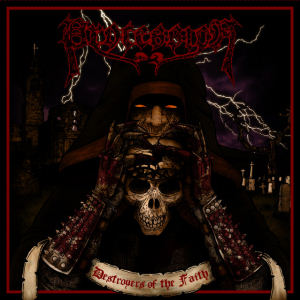
PROCESSION: "Destroyers of the Faith"

It makes me awkward to review something like Procession’s Destroyers of the Faith because it’s quite a hyped record yet I have almost zero knowledge of traditional doom metal. Well yeah, I’ve heard a couple of Black Sabbath’s earliest albums and love many funeral doom bands, but when it comes to the most traditional and essential records of doom metal, I’m quite lost. So this is to be remembered whilst reading my review - perhaps it even brings a fresh perspective, who knows?

Destroyers of the Faith sounds massive. Despite being rather bare - meaning that it’s basically just guitars, bass & drums without any unnecessities - it becomes clear that they’ve spent a good deal of time in the studio making this sound this heavy and loud. At times, the loudness is brought to such levels that - though I’m not a proper audiphile so I’m not 100% certain - the album clips a lot. This kind of reduces the effect of the heaviness, but it’s just a minor detail anyhow.

The album is also epic as hell. This is thanks to the long compositions wandering from seven to nineteen minutes, always having an adventurous feeling to it. Felipe Plaza Kutzbach delivers his clean vocals convincingly and there’s nothing to complain about the rest of the instrumentation either, riffs and beats staying true to traditional doom. One of my personal favourites is the sorrowful guitar solo on ”The Road to the Gravegarden” that doesn’t try to hurry anywhere, backed up by a simple repetitive drum beat.

When the choral sounds of ”White Coffin” end the album, I’m left with mostly positive thoughts about Destroyers of the Faith. While not every second of the album is pure brilliance, it’s still clearly a strong whole that isn’t even prolonged (as could easily happen with slow tempo compositions, but this runs for just 46 minutes). The album inspires me, a doom metal newbie, to explore the traditional fields of the genre more deeply in the future, so indeed I would say that Destroyers of the Faith is a successful release. Bigger doom fans can add a star or half to my rating, without much doubt.

3.5 / 5

Monday, January 17, 2011

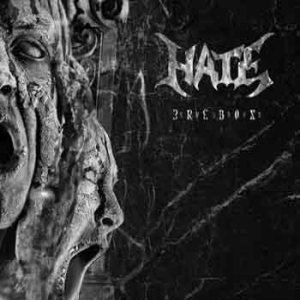
HATE: "Erebus"

Roaaar! Pure ass-kicking modern blackened death metal is to be found from here. No less, no more. If you haven’t gotten enough Behemoth’s latter era’s works, another Polish group - fittingly named Hate - is here on Erebus to provide some very crushing death metal too - and in spite of the very similar style these two bands play, Hate isn’t just a copycapt, knowing that the band was already playing death metal while Behemoth was still in its black metal infancy.

What grabbed my attention in the very beginning is the production: it’s really heavy and aggressive, and in spite of the triggered drums that I almost always despise, Erebus doesn’t sound really plastic like many other efforts in this field. For me, a stubborn lover of natural sound, plastic productions ruin whole albums, but Erebus gets my approval.

Needless to say, Erebus is executed with tight musicianship from the end to the beginning, and maybe there’s even too much technical calculation in the music as there’s some stagnation in the middle of the album where the constant bursts of energy don’t have the same impact anymore, but for the most part, the music holds my interest and sounds convincing.

In case you’re looking for proper innovation, I’m afraid that’s not what Erebus offers but, nonetheless, I find the album’s sheer power satisfying in itself. I’m usually not so much into death metal, especially this modern and (semi-)technical, but I do think Erebus is a rather successful release albeit nothing out of the ordinary.

3 / 5

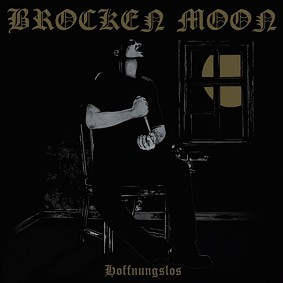
BROCKEN MOON: "Hoffnungslos"

For reasons I can’t entirely explain to even myself, Brocken Moon’s third full-length Hoffnungslos hits the right spots in me. Maybe it has something to do with the natural, honest sound this piece of rather depressive black metal possesses: the music, going from slower synth-fuelled wanderings to maniacal blast beats, is somewhat clumsily executed - not to forget the screams of the vocalist sounding like he was totally losing control - in a rusty, underground production that all adds to the charm.

And the style remains intact throughout the 39 minutes and 7 songs of despondent and odd black metal. We’re not dealing with any masterpiece melodies here, but the way Brocken Moon manages to avoid all the biggest clichés of today - cheap depressive or religious black metal trends - and still incorporates such elements as sorrow and insanity to the music is quite admirable. Hoffnungslos has its own sound, that’s for sure, even if the eerie synths on ”Kälte” are reminiscent of Xasthur, and....

When the album ventures to the seventh track ”Einsamkeit”, something unexpected happens. You know that TV crime series Dexter? Brocken Moon has implemented - or dare I even say ripped off - one of the series’ main theme melodies, and I’m pretty sure it’s not coincidental as the piano and violins (synths) have exactly the same role as on the original piece. I find this quite amusing, and though it fits pretty well to Hoffnungslos, I would still like to find out is there any deeper meaning to this.

I’m certain that albums like Hoffnungslos will never reach big fame but there are people, like yours struly, who greatly enjoy the little details that makes the album differ from the usual standards of by-the-book black metal. Quite like Dark Tribe’s recent album Archaic Visions, Hoffnungslos is a successful piece of primitive, sad and odd black art that will receive a lot of spins in the future. 2011 is kicking off pretty well  though I’m already sure that albums like Hoffnungslos are very few and far between when it comes to being even slightly original.

3.5 / 5

HARKONIN: "Detest"

Labelling Harkonin’s fourth release Detest as mere black metal doesn’t really do justice. Instead, a more fitting term would be something like technical death / black metal in the vein of The Legion: continously wandering music in different tempos with little surprises, vocals ranging from high-pitched screams to low growls, and an always prevalent malicious atmosphere, though Harkonin does implement more melody to their music, ”Chaos Anthem” being a good example among others.

In general, Detest does its job successfully: it grabs your attention well enough and the production is pretty top-notch. But when I start to search for features that would make Detest above any other album in this field, and when I realize the album runs for over an hour, I am not so convinced anymore.

For sure, Harkonin comprises professional musicians, everything is executed with tight precision, sounding evil and strong, but the same time I would have loved to hear something more daring, something that would’ve made Detest sound slightly different from all the rest. After all, we’re not dealing with any superb riffs and melodies here, everything is compositionally on the average line, perhaps slightly above the usual standard of modern metal. A song like ”Insurrection” is a real treat to ears and makes me wish the rest of the album was made with same energy.

Remembering the long running time and the challening technical elements, Detest requires many listens, and perhaps if I had listened to this a few times more before reviewing (I think I’m on my third or fourth run right now), my rating would have gone slightly up, so keep that in mind when viewing my score. Recommendable for fans of death/black mixtures with modern technicality therein.

2.5 / 5

Wednesday, January 12, 2011

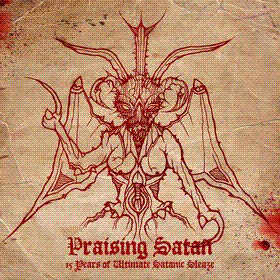
HERETIC: "Praising Satan"

Praising Satan compiles re-recorded and rare material from Netherland’s Heretic’s back catalogue, providing a sweet whole of old school thrash/black metal, rock and punk in 13 tracks and 40 minutes. Stop reading already if you’re expecting something innovative.

After a dozen of modern 200 beats per minute metal albums that I’ve heard recently, Praising Satan is refreshing with its almost laid-back rock rhythms. No blast beats are in sight, basic rock’n’roll beats dominate these simple songs of palm-muted power chords. The vocalist, spewing out his lyrics in semi-clean thrash metal shouts, delivers lots of reverence for Satan but in kind of tongue in cheeck spirit, it sounds. Don’t expect any deep Satanic philosophy. It’s more for the old school shocking value I would guess, in the very vein of those old Venom and Bathory records, records that have clearly influenced Heretic’s sound.

Although most of this material is lately re-recorded, it sounds old. It’s not raw and rehearsal-like at all, but it has the charm of 80s or something along the line. My personal favourites reside near the end of the compilation, namely ”Hellfire Satanist” and ”Black Metal Overlords”, really dusty and filthy pieces that differ a bit from the other tracks’ productions.

I didn’t have high expectations for Praising Satan or even Heretic in general, but I was pleasantly surprised. In spite of the really generic musical style, Heretic manages to do it rather well. This isn’t my usual cup of tea but provides some ass kicking material anyhow, even more so in live settings, I’m sure. Recommendable for all the old school maniacs, obvisously, though I’m unaware how much these re-recorded tracks differ from the originals.

3 / 5

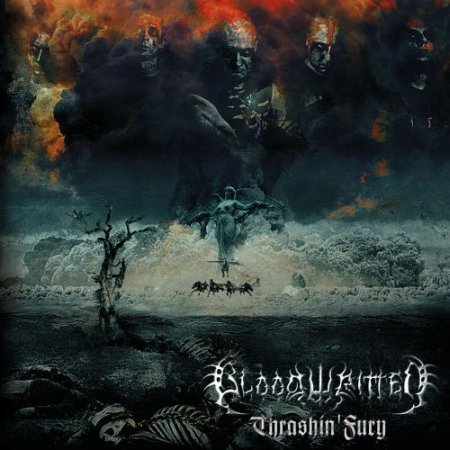
BLOODWRITTEN: "Thrashin' Fury"

In both good and bad, Bloodwritten’s third full-length Thrashin’ Fury is general blackened thrash metal to the bone. While the fusion of the two genres go usually vice versa (thrashened black metal), Bloodwritten doesn’t deliver anything outstandingly unique here: this is basically evil thrash metal with high-pitched black metal screams.

Bloodwritten plays with precise timing and professionality: palm-muted riffs plus drums with good accentuated hits go well hand in hand, sounding always tight and ass-kicking. Give this all a modern, tight production treatment and you get a package of pretty well done metal. But this also makes me feel that Thrashin’ Fury is missing something daring: right now the album doesn’t venture pretty much anywhere, it stays true to its old school values from the first seconds to the last.

”Zombie Survival” belongs to one of the standout moments on the album as it brings a slight change in tempo after the three rampages before it, bringing some slower menacing atmosphere to the whole. Towards the end of the album, I’m feeling that the music doesn’t work as effectively as it did in the first half, and no surprise there, remembering the simple musical style that easily falls to stagnation after a couple of tracks.

Nonetheless, Thrashin’ Fury leaves a positive taste to my mouth afterwards. Pretty much nothing innovative is to be found from the record, but hey, that’s the way it goes with old school attitude. Speaking of which, I wouldn’t have minded if the production was a bit rawer - that could have given the music a little punch more.

3 / 5

Monday, January 10, 2011

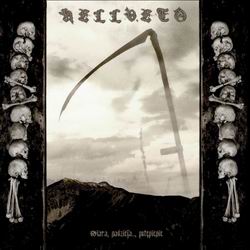
HELLVETO: "Wiara, nadzieja..., potepienie"

It makes me feel bad to discover bands like Hellveto this late, now knowing that he has released a million albums already. Wiara, nadzieja..., potepienie - the third and final part of an album trilogy from recent years - is a true monster of epic folk black metal à la Summoning and latter era Graveland.

And how well is this done! Even if influences can be heard, Hellveto has its own aura, bringing magical orchestral melodies from behind every corner. Metal is not much audible, the focus is on creating glorious landscapes of nature and battlegrounds where metal instrumentation has more of a backing role to the melody heavy music. There’s a ton of layers on the album: something new is always there to be heard, including even bass guitar. Drums are played on a real kit and, if I’m not totally wrong, this is a rather new feature on Hellveto.

Albums that amaze me are always hard to review because I’m having a lack of words trying to explain why something is so good, so I’ll end up saying that there’s just something in this record that has personally moved me, and that doesn’t happen too often, especially with promo albums received for review purposes (which means heavy exposure to mediocre music). Wiara, nadzieja..., potepienie covers a lot of moods from anger to sadness, always keeping a unique, obscure atmosphere within. All this is executed well with a plethora of different instruments.

So if you’re up for a journey through beautiful and almost surreal landscapes, then do yourself a favour and pick up Wiara, nadzieja..., potepienie. In addition to the 7-song main album, a second disc of material related to the trilogy theme is attached to the package as well, making sure you won’t get tired anytime soon: in total, there’s almost two hours of material, much thanks to the second disc comprising over 20-minute songs. And, as usual, only time will tell if this is worth even a higher score: right now I must settle to a close to perfect rating.

4.0 / 5

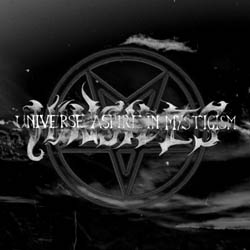
HINSIDES: "Universe Aspire in Mysticism"

Three words could sum up Hinsides’ sophomore album Universe Aspire in Mysticism quite accordingly: Norwegian black metal. Well, that’s not exactly what comes to mind when the album begins with its 7-minute intro ”Dark Matter Dawn” consisting of weird sounds and e.g. guitar feedback, but when ”666 to Nero” kicks in after, the deal is clear.

And the deal is a bit too clear, I’m afraid. Almost 50 minutes of cold, evil AND unsurprising riffage gets easily dull and makes me wonder what, if anything, makes Universe Aspire in Mysticism better than all the others in this field. Anyhow, atmospherically the album does its job well as a pieringly cold assault. Guitars are heavily distorted, tempo is often at middle or fast levels, vocals in the usual high-pitched style, evil melodies with slight flirts with sadness... Nothing really stands out. Everything is safe and sound. By the book. To make some comparisons, a little less melancholic version of Blodsrit or Amystery comes to my mind, in addition to the obvious influential bands.

Universe Aspire in Mysticism is one of those albums that I can always put on the background and find it unharassing yet also quite unremarkable: it’s indeed a decent album that has just been done many times already. Some originality to the mix would have made the album a lot more interesting, especially because the album runs for almost 50 minutes. I’m sure these guys have skill to evolve their sound a bit and I’m hoping they don’t consciously try to restrict that too much.

2,5 / 5

QUINTESSENCE MYSTICA: "The 5th Harmonic of Death"

Quintessence Mystica doesn’t much surprise on their debut album The 5th Harmonic of Death, comprising 11 tracks of symphonic black metal in a dry, crispy production. Musically, nothing out of the ordinary is provided, so that the album falls to the category of rather unremarkable melodic black metal records, unfortunately.

Melodies are always upfront here, usually consisting of various orchestral instruments instead of guitars - albeit some guitar solos appear for sure. The most I like the violins played on the record, they sound dusty and evil, like an old movie of which sounds were horribly gone wrong. This creates a nice vibe. But otherwise, it’s mostly basic synth tracks dominating the songs, being somewhat cheesy and powerless: indeed, almost nothing heavy is to be expected of the album as it’s so melodic. Removing the harsh screams, tremolo guitar picking and the rapid (programmed) drums would create a classical album of some sort, I guess.

Not to criticize the album with too heavy hand, The 5th Harmonic of Death has its moments, e.g. the epic album ending track ”Frankenwald Mystery” and various melody patterns that appear throughout the 43-minute album. But is it enough? For a rememberable album, no. But for a decent effort of quite basic symphonic black metal that satisfies the needs of the most devoted meloblack listeners, yes, I would suppose so. Another album is already in the making and here’s to hoping that it brings some fresh air to the composition department. On a positive side, I can mention that I’ve heard a lot worse album from this category lately (Conspiracy’s Irremediable), so that compensates a bit for Quintessence Mystica’s benefit. 

2,5 / 5

Friday, January 7, 2011

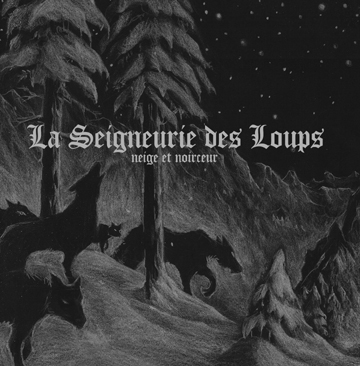
NEIGE ET NOIRCEUR: "La Seigneurie des Loups"

The cover art of Neige et Noirceur’s second full-length La Seigneurie des Loups implies that the album contains a load of wintry black metal, and to some extent that is very true: sharp guitars bring forth cold melodies while rapid (programmed) drums batter like a blizzard and somewhat effected vocals provide chilling atmosphere à la ColdWorld and Paysage d’Hiver. There’s a lot of hypnotizing moments in the music, not unlike Darkspace, given the somewhat machined feeling that the drums cause.

But what makes La Seigneurie des Loups mainly different from the aforementioned is the use of traditional istruments. This becomes clear on the first tracks - ”Croix de feu Croix de fer” and ”Ancien Folklore Québécois” - already. Then comes ”1839”, a short interlude of acoustic guitars playing upbeat melodies. These are the distinct features of Neige et Noirceur that are very welcome, though their incorporation into cold black metal isn’t exactly perfect. Hearing happy flute melodies and warm acoustic guitar strumming amidst fiery black metal has its problems, needless to say.

Nonetheless, La Seigneurie des Loups is dominantly a positive experience in the end. Song lengths spanning from one to sixteen minutes makes the album a hard piece to digest but worthy of diving into. Fans of the bands mentioned in the first paragraph might enjoy this greatly, even if this isn’t a groundbreaking record in any way.

3 / 5

Thursday, January 6, 2011

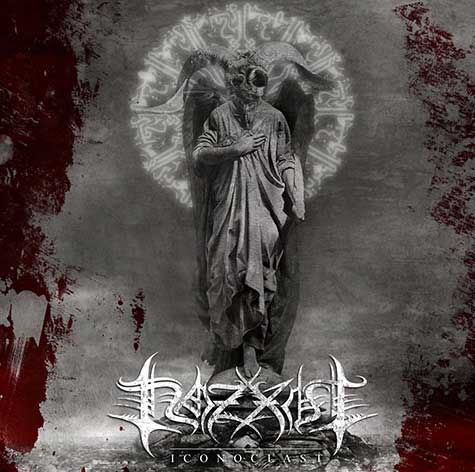
NAZXUL: "Iconoclast"

Nazxul remained rather silent in the 2000s and, in fact, this is the band first full-length in 14 years. Now I must confess that I’m not familiar with Nazxul’s back catalogue (soon to be fixed though as I’ve already received a promo of their debut that was just rereleased) so this is written from the perspective of a total newbie to Nazxul’s music.

What Iconoclast seems to offer is synth heavy melodic black metal. Clear and professional production backs up this lengthy piece of 14 tracks - of which some are pure ambient interludes, though. There’s almost nothing obscure about Iconoclast: everything is upfront and easy listen to, from the accurate and massive drumming to the evil shrieking somewhere in the middle range. However,  a great deal of details can be found from the record as it contains many layers of sounds, so it’s not like Iconoclast is THAT simple album to digest.

While the first half of Iconoclast focuses on faster tempo and more devilish output, the eleventh track ”Oath (Fides Resurrectio)” slows things down a little and sounds upbeat, at least partially. This kind of little variation between songs is very welcome. I also find myself enjoying the short ambient pieces greatly in all their minimalism: they’re done with good taste, humming and droning pieces of simple sounds.

What I fail to grasp about all the hype I see revolving around this album is that what makes Iconoclast so special? Most certainly, the album is well done in every aspects but I can’t help thinking that this doesn’t differ so much from some other modern symphonic black metal efforts. Nonetheless, you can expect a lot of great atmosphere from this album even if it doesn’t provide any surprising moments. At all, really. From that perspective, Iconoclast suffers a lot. But then again, I do enjoy the album all around but, in my opinion, doesn’t deserve all the praise that it’s been getting. Definitely above your average symphonic black metal album, anyways.

3 / 5

LÖNNDOM: "Viddernas Tolv Kapitel"

The musical paths of Lönndom’s members have gone through various phases, crossing black metal (Armagedda), simplier rock (LIK), and folk metal with Lönndom. Last year Lönndom unleashed Viddernas Tolv Kapitel, a pure folk album consisting of nothing but acoustic guitars and clean singing. While black metal related bands can do acoustic albums outstandingly (think of Drudkh’s 2006 effort), I am not so sure about Viddernas Tolv Kapitel.

Atmospherically, everything is in its right place here, sounding all natural and woody. This is a proper dive into autumnal melancholy and beauty. But the problem here is that none of the compositions really stand out in any way - surely there are various good melody patterns (e.g. ”En vår är kommen”) but otherwise this one hour monster is in stagnation. And here comes my oh so common rant: one hour is a too long playing time for simple acoustic strummings with almost zero variation. Vocals are masculine and chant-like, there’s definitely emotion in them; but on the other hand I feel that they don’t always properly fit to the actual music. Some compositions I would have enjoyed much more if they were solely instrumental.

Viddernas Tolv Kapitel is surely crafted carefully and most definitely has its fans, but personally I find it somewhat uninviting. If or when I am to pick an acoustic album to enjoy on a quiet day with a cup of tea, it would be some other than Viddernas Tolv Kapitel. I still believe, however, than Lönndom are able to surprise, knowing the members’ history of shifting musical styles, so perhaps their next album will surprise me more positively.

2 / 5

Sunday, January 2, 2011

THE ORDER OF APOLLYON: "The Flesh"

Consisting of members related to Cradle of Filth, Akercocke and Aborted, I didn’t expect to hear this bare deathened black metal on The Order of Apollyon’s debut album The Flesh. And the initial surprise was positive most certainly, but towards the end of the album I’m realizing that The Flesh falls down due to fairly mediocre filler material.

Indeed, taking at least ten minutes away from this 40-minute piece would have helped the album a lot. I’m quite impressed in the beginning when this war machine begins its rampage on the militant rhythms of ”God Speaks”, followed by the rapid strafe of ”Ich Bin Das Licht”. The production is really crispy and tight, a nice contrast to the other Listenable Record’s output this year, the muddy and bassy Fester and Putrefy by Cavus.

Near the middle of the album, my focus starts to wander around and the tight riffage and accurate drumming doesn’t have the same impact anymore. The songs follow another too closely and some variation would have been in place to create a more interesting whole. There’s no question of the member’s technical abilities but it doesn’t take away the fact that these compositions aren’t above the line of mediocrity.

The Flesh isn’t a failure but could have been better. Production-wise and technically everything seems to be okay - after all, these are experienced musicians behind The Order of Apollyon - but something is lacking compositionally. A good production alone doesn’t make a great album. Perhaps their next album will fix that glitch, here’s to hoping. Bonus points for the lyrically interesting theme, however.

2,5 / 5

HAT: "Vortex of Death"

With all the possible jokes about the band’s name aside right in the beginning, Vortex of Death is a rather well-done album of uncompromising and evil black metal with all the necessities inside: malicious atmosphere, simple riffs and underground production.

To be honest, though, Vortex of Death was uninviting at first. The production is fairly poor due to the overall powerless sound - guitars are really thinly buzzing - and clearly programmed drums. But there was something in the music that kept me getting back to the album and still keeps: in spite of all the clumsiness sound-wise, the album is somehow charming and songs like ”The Flesh I Wear” and ”Slaves of Insanity” comprise impressive guitar lines. ”Tilintetgjørelsen” ends the album with epic soundscapes, another standout moment on the album. Undertrykker’s raspy screams are one of the best features here even if nothing new, compensating for the otherwise weak production.

Multiple listens reveal that there’s more depth to the record that it first seemed: there’s some synths to be spotted occasionally and the riffs just start to sink in better in time. Countess is what comes to my mind when listening to Vortex of Death, but just a more devilish version. There’s no way I could recommend this to someone only into modern technical black metal acts, but those who don’t mind some clumsiness and not-ass-kicking production, then do yourself a favour and look into this.

3,5 / 5

INFERNAL WAR & KRIEGSMASCHINE: "Transfigurations"

Transfigurations collects together two important Polish black metal groups, namely Infernal War and Kriegsmaschine, so that it’s more than fitting that these two appear on a split release, also considering their musical and surely ideological closeness.

Infernal War is the more thrashing of the two, providing some very crushing black metal with really tight and ass-kicking production. ”Into the Vortex of Naugh” is the most violent and fast of the band’s three compositions here, not to underestimate the power of ”Primal Degradation” and ”Incipit Chaos” at all. Ultimate blast beats and destroying slow parts with professional technicality but never gimmicky, a way I often enjoy my black metal. In spite of not bringing anything new to the table really, Infernal War convinces me pretty well and is surely recommendable for fans of e.g. Massemord.

Kriegsmaschine, however, was the band that I had most expectations for. It’s been five years since we’ve heard about this band as most of the members have focused on Mgla I guess, and now it’s finally time to hear new material from them. Nothing has radically changed: authentic and powerful black metal with some flirts with religious black metal phenomenom (yeah, that melody dissonance), rather growly singing, well-executed and groovy drumming, and production as tight as it was with Infernal War. Guitars are somewhat downtuned, creating an utterly evil atmosphere. ”Onward Destrudo” gets only better when it progresses to a sweet breakdown and ”Fear and Loathing in Gethsemane” is on the same level of greatness with its pounding slow parts and transitions to buzzing seas of blast beat with careful use of melody.

Needless to say, I’m enjoying Transfigurations greatly. It comprises black metal that doesn’t recycle the same ideas all over again (especially Kriegsmaschine) and brings fresh yet not experimental black metal to the table, kicking ass with sheer power and almost scaring the listener with its atmosphere. One of my personal highlights of 2010’s latter half.

4 / 5

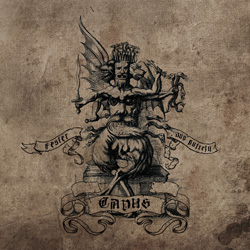
CAVUS: "Fester and Putrefy"

Muscular black metal - a fitting term that I’ve come across in relation to Cavus’ debut assault. Fester and Putrefy offers 45 minutes of crushing, bassy and hence almost sludgy black metal, sound-wise close to bands à la Diocletian. Considering the band’s homeland, this isn’t the most played style there, so though nothing new is to be expected, Fester and Putrefy is still refreshing in its own way.

After the introduction track’s atonal guitar screeches are done, Cavus attacks with a sledgehammer named ”Fist of the Titan”. Tempo is commonly kept somewhere in the middle grounds though fast bursts occur often, too. Due to the rather generic musical style, highlight moments are hard to spot but the most I enjoy e.g. ”Death Rattle” with its chorus(-like?) proclamations and the gloomy and trance-inducing atmosphere on ”Eyeless Gaze” that even flirts a bit with melody. The production is well done, not rehearsal-like but neither polished; dark, muddy, full, all instruments audible.

One common problem in this style is the total playing time, and this applies to Fester and Putrefy, too. 45 minutes is simply too much. Like Black Witchery does, I would love to see these bands creating close to 30-minute albums so that the constant chaos wouldn’t start dulling the listener. Luckily, Cavus isn’t the most generic band in this field as they realize to incorporate some melody to the sound as well. Fester and Putrefy is a recommendable piece of black metal with some balls.

3 / 5

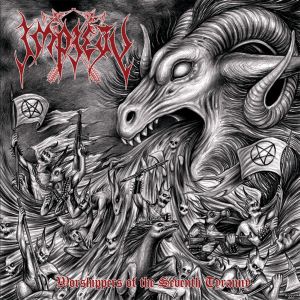
IMPIETY: "Worshippers of the Seventh Tyranny"

Worshippers of the Seventh Tyranny is a surprising album considering Impiety’s back catalogue of not-so-innovative war metal bursts. What we have here is one 38-minute song with recurring slow and rather melodic parts, and one of the key melodies of the song - a choral synth melody - sounds almost happy and hopeful (though the lyrics proclaiming nuclear holocaust imply otherwise...)! I bet this album will cause varying opinions among the band’s fans.

How successful is this daring experimentation, then? I would lean on a positive opinion though the song has it flaws too, e.g. the production could do better as the triggered drums are too much upfront so that guitars lack some punch. Also, some sections are repeated even too often, but other than that I find myself enjoying the fresh approach, and don’t you old schoolers be totally desponded: there’s those more familiar fast blast beat sections here as well! But more prominently, the album relies on epic - yet evilish - riffage in slower tempos.

I’m not sure how much I would’ve liked another album like Terroreign, so Worshippers of the Seventh Tyranny came as a welcome surprise. It’s not the most groundbreaking record of 2011 I’m sure, but an interesting journey to experience amidst all the generic Ross Bay clone bands, nonetheless. 

3 / 5