Thursday, March 31, 2011

BATTLE DAGORATH: "Ancient Wraith"

Coldness, that prevailing theme of a myriad of black metal albums, is also the main component on Battle Dagorath’s second album Ancient Wraith, a freezing 70-minute package of harhs black metal that has its ups and downs.

As soon as the synth-filled introduction ”Spirits of Winter Darkness” is over, the 12-minute ”Empire of Imperial Shadows” attacks with steady tremolo picked guitar lines laden with something mysterious and evil. The vocals I find very reminiscent of Striborg, in that there’s a great deal of distortion and delay used, making it all sound a little unnatural. Speaking of which, the drums are programmed as well, although it’s pretty well hidden in the harsh soundscape of the album. Yet at times the machinery hihat hits can get a little irritating, anyway.

Compositionally, Ancient Wraith is pretty much in balance throughout, never properly amazing me but admittedly there are some quite damn hypnotizing moments, such as on the 14-minute ”Kingdom of Black Abyss” that has a really sweet mid-tempo section towards the end, melancholic, ringing guitar melodies being picked with a fitting synth mat in the background, making a really effective atmosphere. ”Ancient Spectre of Oblivion” will undoubtedly divide opinions, being a 19-minute monster of pure ambient and drone. I find it fitting to the album’s theme though the length becomes its obvious glitch.

By no means is Ancient Wraith a mandatory purchase but it does deliver some authentic sounding black metal coldness, hence deserving a full three star score, also due to some of the majestic highlight moments in a few corners of the album. Perhaps with a little more organic production and more innovative compositions Battle Dagorath could next time conjure up a truly great release.

3 / 5

Tuesday, March 29, 2011

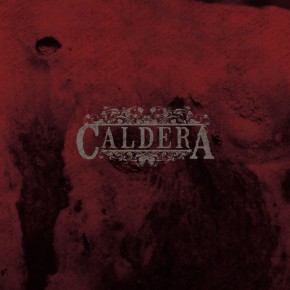
CALDERA: "Mithra"

On their second full-length offering Mithra, French Caldera delivers rather intriguing, repetitive, murky doom metal that meets with the climaxes of post-metal progressions, and all this wholly instrumental. The album consists of two tracks that run for over 15 minutes a piece, creating a fitting total playing time for a style that could easily turn into boredom.

But luckily Mithra is far from anything tiresome, though it does require an acquired taste. If you can’t handle chorus-free music without constant twists, Mithra is a dead end. But for me, a lover of repetition - thanks to many hypnotizing black metal albums - and purely instrumental music - thanks to a bunch of great post-rock albums - this record is a great listen. Starting calmfully with ”Lithogenitvs”, the song soon after builds up to simple yet addictive distorted guitar lines with steady drum beats behind, and after a while I’m surprised the song already fades out. ”Sacrificivm” continues then, with a tad more discordance in the melody department, at times reminding me of the lunacy of Deathspell Omega, yet never being technically challenging or fast at all.

Mithra is, all in all, a mesmerizing album that might not be entirely original, but a very fine album that requires close attention; otherwise it could turn into worthless background noise. The production here is full sounding, all instruments well in the picture. Good running time with adventurous music and no annoying features whatsoever makes an album that doesn’t change my life but what will receive listens from me fairly frequently now. Mithra is a recommended piece for post-metal fans who enjoy slow tempos and doomy sound.

3.5 / 5

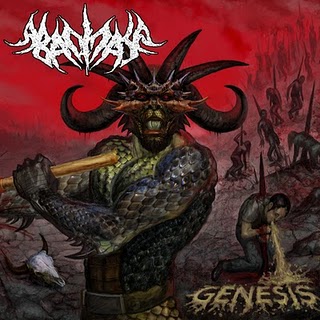
ABACINATE: "Genesis"

Although I’m not the biggest fan of the musical styles presented on various albums I get to review, I’m still able to spot talent, and that I do find from Abacinate’s second full-length Genesis, a real mixed bag of influences.

For the most part, the album is technical death metal, but every now and then the vocals are pure hardcore / metalcore, and at times the music flirts with more apparent melody. For instance, the two-part ”Laughing in the Dark” goes into rather progressive territories, the first part having a surprisingly calmful and melodic ending, then suddenly bursting into metal on the second part. Personally, I really don’t dig the hardcore vocal output, but it does bring me back to my younger years when Biohazard was one of my favourite bands. The hardcore elements aren’t something I would listen to nowadays, but in the middle of all the solidly executed death metal, it’s bearable.

The production is definitely worth meantioning here: it’s very clear and heavy. And modern. That migh become a problem for someone, because Genesis doesn’t quite have the filthy morbidity of old school death metal when it comes to atmosphere. I prefer the latter but I do admit that the production here is done admirably anyways, fitting to the band’s tight style that only gains from the very sharp sound.

As anyone can derive from the above, Genesis isn’t the sort of death metal I truly enjoy and listen to on a daily basis, but I find the music - much thanks to the ass kicking production - effective to the extent that I’d call the album a successful release. Genesis is a recommendable piece for those who enjoy their brutal and technical death metal with a little bit of -core. Also, remember to give these compositions enough time, they aren’t that digestible after all, but do reward eventually.

2.5 / 5

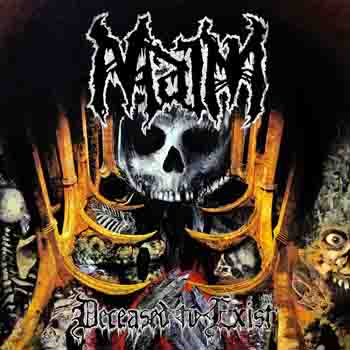
MAIM: "Deceased to Exist"

Swedes and their old school death metal. Read no further if those words already sicken you, but if you are one of those who still check out new bands playing what Dismember, Entombed and Grave did twenty years ago, proceed: Maim’s second album Deceased to Exist, released during the first days of this year, is a very solid piece in that certain style.

And lucky for them, they have not utilized the biggest clichés available, namely the buzzing guitar sound; instead, the guitar sound here is just purely heavy and deep, and so are all the other instruments as well, much thanks to the highly reverberating production that is a definite plus feature of Deceased to Exist, creating an abyssal atmosphere.

Also, the band knows how to slow down and still sound utterly menacing: while songs like the opener ”Gravedigger Sacrifice” attack with moderately high speed, there are, for instance, the Archgoat esque sections of ”Morbid Desecration” and the wholly slow-tempo, doomy ”Crematory” that belong to Deceased to Exist’s finest moments. Another highlight worth mentioning is the closer "Screams of the Mutilated" that, even if otherwise unsurprising, ends the album in sinister solos and spoken samples in the background.

Towards the end of the album the similarity of the songs becomes a little dulling, but nonetheless I can say that Deceased to Exist is a fine old school death metal album with convincing heaviness and darkness. After all, it's not every day when you come across this well done production job combined with crushing, evil compositions. Fans of the style won’t waste their time at all checking out this album, I’m sure.

3 / 5

Monday, March 21, 2011

VALEFOR: "After the Sad Hours"

Valefor’s earlier appearance on the Passages from the Dark Side split didn’t leave me wholly convinced but I was still enough eager (and completist) to look into After the Sad Hours, a new demo of depressive black metal and doom metal combined, unleashed in early March.

And I’m afraid that nothing has truly changed: after the mournful clean guitar intro ”Nowhere”, the title track begins with a slow and a moment later highly distorted guitar picking and soon after the drum machine kicks in with the dooming, slow beats that perhaps nod to Forgotten Tomb’s direction. The drum machine is a little cheap for sure, but luckily the low-speed style makes it tolerable. Vocals are once again delivered in the vein of Mortualia’s debut and Heartless, in practice meaning very high-pitched wailing with no rasp. This might turn off some but I find it enough fitting, and at least it’s not the most common style used.

All the three black/doom metal songs of After the Sad Hours wander in the very same, despondent and hopeless spirit, making the demo atmospherically a success in what it’s supposed to evoke, but otherwise quite a stagnant whole of absolutely nothing surprising; a whole where it’s musically hard to differentiate the tracks. ”The Embrace the Pain” provides the best moments on the album, daring to go to some rather fast sections in its almost 9-minute running time. ”Helpess Souls” is similar to the intro, being an interlude of mere clean guitar, and then there’s the doomiest ”No Place for Hope” that ends the demo finely but predictably.

In a nutshell, After the Sad Hours is a general (generic?) piece of depressive black metal which might appeal to the most hardcore followers of the subgenre, but for others it is a lackluster 32 minutes. I incline toward the latter people even if I see some potential in there, if only he would come up with something more original next time.

2 / 5

WARFIELD: "Trivmvirat"

With a band name like Warfield I expected to be exposured to some fast war metal bursts when I’d put on their latest offering Trivmvirat, but what we’ve got here instead is rather thoughtful yet violent black metal, not that far from Watain, and what surprises me even more is that this band hails from Mexico and not from the northern soil.

Trivmvirat kicks off with ”The Initiate”, introducing maliciously ringing high-pitched guitar picking tones with a steady drumbeat behind until the song fires to more rapid speeds, semi-low growls echoing on top. ”Divinity” attacks with belligerent blast beats right from the start, and there’s a sweet death metalish lick in the rhythm that makes it stand apart from a generic and meaningless blasting. ”Trinity” continues in the vein of the previous tracks, concluding the original EP with an atmosphere that evokes also hopelessness, thanks to that fantastic, vaguely melancholic riff in there that makes the song the highlight of the EP.

The upcoming re-release also comprises three live and one rehearsal track. The live material is sound-wise of quite low quality, so audiophiles stand aside: compared to the rather professionally (yet tastefully) produced original EP material, this is really rusty and low-fidelity, offering little to someone who wants to hear all details perfectly. The sound is a mess where cymbals (and the outstandingly monstrous drumming in general) dominate, evil riffs and vocals more in the background. ”Pestilencia” is an instrumental rehearsal track of rehearsal audio quality, indeed. Personally I think that vocals are an important role in Warfield’s music, hence I find this track a little worthless here: with vocals and more worked production, this could turn into a great song.

Trivmvirat is a positive experience in the end, mostly thanks to the original songs and not the four bonus offerings that might have little worth to many listeners. Fans of utterly violent black metal (à la Infernal War) with a touch of versatile compositional structures are recommended to look into Trivmvirat, an EP that’s absolutely nothing new but where all the good ideas of savage black metal are put to very fine use.

3.5 / 5

Saturday, March 19, 2011

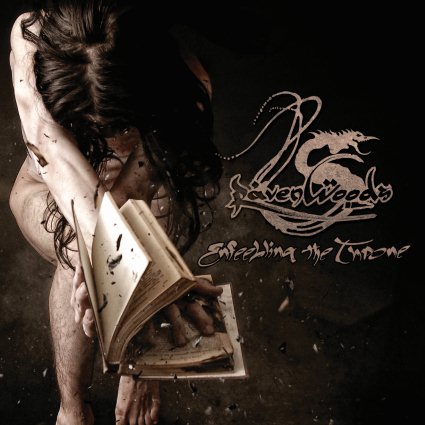
RAVENWOODS: "Enfeebling the Throne"

On their second full-length assault, Ravenwoods unleashes quite a mixed bag of influences from various genres - in good and bad. While the band seems to focus primarily on death metal - be it blackened death metal, technical and brutal death metal or even melodic death metal, yeah, all that is here - the band also incorporates calmful passages of traditional instruments into the mix that makes, all in all, a decent but the same time a tad incorehent 41 minutes.

Primarily, Enfeebling the Throne blasts not unlike Behemoth, including precise and monstrous drumming and very similar growls, and on these tracks I wish the band would have added something more original into the compositions - no matter how crushing these tracks nonetheless are, mostly thanks to the heavy and massive production. Yes, there’s a lot of Nile esque mysterious acoustic moments within songs (”Breathless Solace”, ”Torture Palace” and ”Upheaven-Subterranean” to name a few) but they sound a little apart from the metal, just suddenly appearing out of nowhere. The traditional elements are put to their best use at the outro ”Azab-I Mukaddes” which is entirely in that style, giving that side of the band more time so that it isn’t just a random one-minute interlude between all the chugging riffs and blast beats.

The latter part of the album starts to reveal the melodic death metal which, I surprisingly think, is the most interesting half of the record. The cleanly sung chorus of ”Stay” could appear on an MTV poprock song but I find it done tastefully, and then there’s ”The Fading Trace” that also flirts with that certain Gothenburg sound. All this makes, indeed, a bit random sounding whole of different ideas. With a little more coherency and better mixing of the styles together, Ravenwoods could have produced a fantastic record. What is left now is an album with various good ideas that just don’t all work together so well. Nonetheless, we are not dealing with a lackluster record here, so that those more into death metal than yours truly can appreciate Enfeebling the Throne a lot more.

2.5 / 5

Friday, March 18, 2011

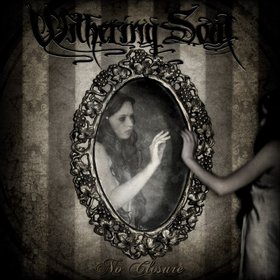
WITHERING SOUL: "No Closure"

After reading a plethora of praising review lines and selling points about Withering Soul’s No Closure - their first album in seven years - I’m amazed... because I truly can’t grasp what makes this album that outstanding. What my ears hear is some very basic, modern and fast melodic / symphonic black metal with some death metal chugging therein, and this combo most certainly doesn’t offer anything we haven’t heard before, and what hasn’t already been done better. No matter how many spins I’m trying to give to the album, I simply don’t see the appeal and wonder how much someone has paid for the reviewers... Okay, I’m starting to be over the line here but that’s what comes to my mind in all honesty, anyways.

The band members are most certainly professional here, all instruments are handled with tight precision - to the point that e.g. the triggered and upfront bass drum is mostly just annoying - and there’s always something happening in the soundscape - No Closure is energetic throughout, that’s for sure. The main glitch of the album, however, resides in the compositions that kind of reek of unoriginality and tameness. If I want to listen to metal, I expect to hear something ominous and daring, not a light version with semi-happy melodies and overall unnecessary accessibility. Hence my favourite piece of No Closure is actually the ambient outro ”A Requiem of Sorrow” - utilizing synths, bass guitar and cavernous piano - that is done rather well.

It hurst me a little to rant this heavily over an album whose makers have probably spent a lot of time crafting it, so if we want to take a peek into another positive moment of the album, there’s the gothic influenced ”Unquiet” that incorporates some female vocals on the chorus and it fits well. In fact, this song is of rather high quality on the first half until it later bursts into the metal that kind of struggles with all the joyful and harmless melodies. No Closure might have its fanbase among the youngsters and those who are getting into black metal and/or don’t want to have it too daunting yet. In a nutshell: not a total failure, but crucially lacking to inspire me at all.

1.5 / 5

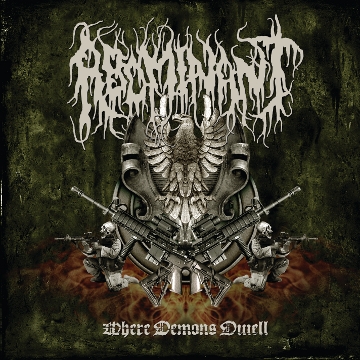
ABOMINANT: "Where Demons Dwell"

Year after year and an album after another, Abominant has been cranking up new material since mid 90s and never reaching big fame. This is understandable in the context that the band most certainly aren’t innovating anything new, but on the other hand their newest output Where Demons Dwell has remained rather steadily in my player for a long time already, meaning that in spite of all the similarities to other bands, Abominant’s ninth full-length is a great listen.

I’m not an encyclopedia when it comes to death metal - a genre where only a few bands truly interest me - but Where Demons Dwell reminds me of a couple of other American death metal churners, namely Ares Kingdom and Arghoslent in the sense that instead of mere blasting, the band in question knows how to incorporate some melody into the music as well. Don’t get me wrong, Abominant sounds authentically evil and heavy, but melody is carefully used in a few places such as on epic solos and, for instance, on the vaguely melancholic and black metalish (think of Weapon) chord progressions of ”The Wolves of Hate”. Another place where the black metal flirt can be heard is on the discordant, Watain esque guitar picking intro of ”After the Fallout”

This kind of variation throughout the otherwise old school 40 minutes is what makes Where Demons Dwell rise higher than many other death metal contenders of today in my books. There’s a few weaker tracks in the whole though, the last two in particular, that perhaps repeat the previous ones too much, but there’s absolutely nothing on the album that I wouldn’t enjoy at least to some extent, hence ensuring its place among my currently favourite death metal albums. Production-wise, the record isn’t either dirty nor polished, balancing fittingly somewhere between, and the instrumentation is handled professionally (bonus points for the steady yet monstrous drumming) and the growls - nothing too guttural - are delivered with power. All this makes a recommendable piece of death metal, and it won’t be long until I’ll look into their back catalogue.

3.5 / 5

ILDRA: "Eðelland"

It seems that United Kingdom has recently shaped up when it comes to epic and folky black metal, Wodensthrone being a great example of that with their 2009 album Loss, and now there’s Ildra and their major debut Eðelland offering an adventurous 50 minutes of noble pagan metal, not far from the previously mentioned band nor Graveland’s latter era.

Eðelland sounds full in all aspects: the production is rich, distorted guitars having enough strength and the acoustic ones a natural, woody sound - most audible on the various acoustic interludes all around the album. These short passages have, in fact, grown to be my favourite pieces of the album, perhaps because they lack the minor glitches of the metal on the record: namely, programmed drums. Luckily, it’s done pretty tastefully and undisturbingly, so do not expect to hear any lame, mechanized sounds on Eðelland. This is authentic music after all, not hindered even by a drum machine.

Compositionally, Eðelland is nicely varied, moods shifting from proud joy to mesmerizing  melancholy. I can’t say I understand a word the singer screams (I suppose the lyrics are in old English as are the song titles) but it goes well hand in hand with the music. There are some moments that I would remove from the album, such as the sudden happy guitar soloing on ”Swa Cwæð se Eardstapa”, but for the most part, Eðelland is laden with consistently good material, hence deserving a favorable score.

As said, the overall impression of the album, including both music and the beautiful cover art, is largely positive: the infant label Sonnenrune Records haven’t started their career with any worthless material, that’s for sure (the previously reviewed Sferslav EP backing up this argument). Eðelland is an evocative piece of music that might not move mountains with originality yet still is a fresh breeze from medieval English landscapes. Definitely worth checking out if you are into the two names mentioned earlier or any similar bands.

3.5 / 5

Monday, March 14, 2011

OLD WAINDS: "Where the Snows Are Never Gone"

When speaking of old Russian black metal, Blazebirth Hall is probably the first thing in everyone’s mind. And not until now I’ve gotten to discover Old Wainds and Where the Snows Are Never Gone, an utterly filthy piece of ice cold black metal originally released on tape in 1997 and now seeing the light of the day again, though there has been various re-releases along the years already. And I’m really happy to get to discover this 90s gem finally.

Where the Snows Are Never Gone
is a relentless and piercingly cold assault of noisy black metal somewhat similar to Ildjarn, plus there’s also minor hints of melancholy in the mix (”Winter Warriors”) reminiscent of e.g. Baptism, though only rarely. While drums keep blasting steady blast beats along with guitars providing menacing tremolo riffage throughout, the upfront screams are noteworthy as well, going hand in hand with the harsh, evil and cold atmosphere of the demo.

Needless to say, the production here is raw to the extent that the listener base will always remain minimal, but those with a taste for utmost rawness will see the appeal behind the wall of distortion. Indeed, the compositions are of surprisingly high quality: not that these songs would be carefully composed and finely crafted pieces, but the evil riffage here has an intuitive charm that lures for replay. The music sounds alive and ominous.

Where the Snows Are Never Gone is a worthy acquisition is you’re interested in hearing what Russia had to provide in 90s and you have already gone through all the available Blazebirth Hall bands. Recommendable, indeed, for the fans of a great deal of filthiness in their black metal. Enough said, I suppose.

3.5 / 5

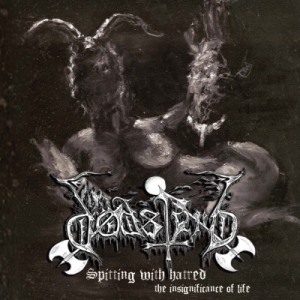
DODSFERD: "Spitting with Hatred the Insignificance of Life"

After my introduction to Wrath’s music that happened via Nadiwrath’s recent debut Nihilistic Stench, Dodsferd’s sixth full-length Spitting with Hatred the Insignificance of Life took me by surprise. Sure, there’s still something childish in the overall impression that Wrath somehow seems to attach to everything he does (just look at some of the songtitles on previous records) but I can’t escape from the fact that at least this particular album has some very fine riffs on it.

Whereas Nadiwrath seems to be the punky and rocking black metal outfit of Wrath’s, Dodsferd delves - in addition to the overall harshness and rage - in murkiness and melancholy, though the rock attitude is somewhat present here as well, as the drum beats and bass lines in the beginning of ”Your Kingdom Was Built in a Lie” and solos on the title track imply. But for the most part, Spitting with Hatred... is laden with tremolo picked darkness, darkness that at times rises to almost heart-rending levels of beauty, just listen to how those steadily fired riffs burst into touching melancholy on ”The Hate Goes On” and ”Praying in Vain Under the Shrine of Your God”.

Thus said, points have to be given to the guitarwork on the album. While not every riff is of pure splendour, the quality is consistent and in spite of all reservations I have about Wrath’s music, his work here is noteworthy. Some of the tracks could do better with a slightly shorter running time (half of the six pieces pass ten minutes) but I am still not bored at any point. The production is fittingly lo-fi yet tight, and so are fitting the high-pitched screans, plus all instruments are nicely audible in the dusty soundscape. Spitting with Hatred the Insignificance of Life is a worthy even if not entirely oustanding piece of uncompromising black metal that will receive multiple spins from me in the future. Concrete rating is hanging somewhere between three and three and a half stars, if that’s something you look for in reviews.

3 / 5

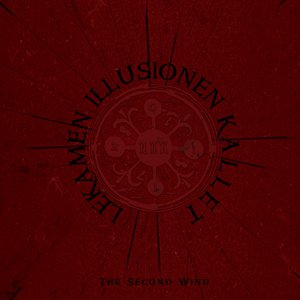
LIK: "The Second Wind"

Just when I had said that it’s awesome to hear an Armagedda member still doing black metal in De Arma because Armagedda has been rotting in the grave for a long time, a new LIK album emerges unexpextedly as well. I’m not familiar with this black-metal-meets-filthy-rock band’s whole discography - I remember hearing the 2003 debut Må Ljuset Aldrig Nå Oss Mer a year ago or so - but The Second Wind most certainly rises my interest to look better into the older albums as well, because I do think that The Second Wind is that good.

The album doesn’t try to fish fans with modern gimmicks. That would be a good summary of the whole album. Lo-fi drumlines don’t provide technical fills nor beats but do keep the songs intact with steady 4/4 beats while the rusty guitar sound delivers malicious riffs and melodies, at times rising to almost ethereal levels of beauty  (”The Other Realm” and the epic instrumental outro) and at times just rocking the hell out, like in the straightforward ”Death Breeder” and the first half of ”A Filthy Ride”. Vocals range from the folky masculine chants heard in Lönndom, most perfectly executed in the touching chorus of ”Kallad till Bortgång”, to raspier mid-range screams and muttering.

The Second Wind takes its time to open - after all, the grey lo-fi sound isn’t so luring at first - but the melodies here a truly good in the end. LIK fans will as well love these 40 minutes, that’s for sure. Also, anyone who’s up for some great riffing that is both evil and beautiful and who doesn’t require polished productions from his/her music won’t lose anything by checking out The Second Wind, an album that is a very welcome return from a band I thought was dead already.

3.5 / 5

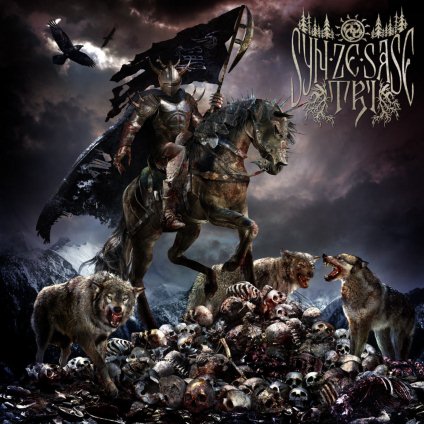
SYN ZE ŞASE TRI: "Între Două Lumi"

Eastern Europe seems to be the fertile ground of symphonic black metal right now, and although most of the efforts I’ve heard lately are crucially lacking in any good and original ideas, Syn Ze Şase Tri’s debut offering Între Două Lumi is a rather interesting 43 minutes that mix the energetic and grandiose elements of Dimmu Borgir with a minor flavour of Negură Bunget - unsurprisingly, knowing the connections between the latter and Syn Ze Şase Tri.

Între Două Lumi does have same flaws that I can’t help spotting from basically nine out of ten symphonic black metal albums - such as cheesy synth melodies - but the band’s strength here is the incorporation of Negură Bunget esque mysterinousness into the mix: whereas the first proper track ”Ziua din urmă” is still a rather straightforward sympho black metal piece, the third song ”Făuritorul lumii” dares to approach more dangerous waters when it comes to originality. Some of the atonal tremolo picked guitar lines even remind me of Nightbringer’s album from last year which might be an unusual yet somewhat fitting comparison in the context of this particular track.

The quality of the compositions remain pretty much on the same level throughout, the songs never providing anything truly outstanding but on the other hand the little twists and more personal ideas every now and then make sure that Între Două Lumi isn’t a boring album to listen to. The production could do better (or then it’s just my promo version that has quite a watery and weak sound) but it doesn’t hinder me from liking the album, liking the album to the extent that it’s so far the best sympho black metal album from 2011 along with Saille’s recent debut.

3 / 5