Monday, February 28, 2011

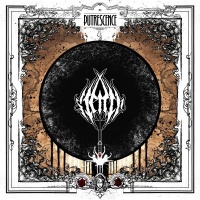
STENCH: "In Putrescence"

Hey, Swedish old school death metal, what a surprise! Well, much to Stench’s good, their debut album In Putrescence does not have that thick and asphyxiating guitar tone and all the possible clichés. Instead, the production here is more breathing and slightly less in-your-face -  though the sheer rapidity of this music is still formidable - and there’s some hints of black metal in the mix too.

For the most part, Stench plays fast, blast beats dominating but there are those usual d-beats too. The guitar riffs combine the usual power chords with more menacing and high-pitched one-string tremolo fire more reminiscent of black metal, as are the mid-range screams of vocalist Micke.

The first songs into In Putrescence are really grabbing, but somewhere in the middle of the album things are getting a tad too familiar. Luckily the album runs for a fitting 30 minutes so that I can always listen it through without real boredom, but I do think there’s some compositional stagnancy here that clearly hinders the album from rising to being truly great, making it deserve full three stars only barely.

In Putrescence is a worthy exploration for fans of old school, dirty death metal. It isn’t a groundbreaking record by any book but a satisfying listen for sure. Here’s to hoping that next time when Stench is around they’ve come up with a more competent whole: seeing that they are not afraid to break the boundaries of old school metal (even if it’s just minor damaging of the barriers), I could expect something greater in the future.

3 / 5

NAZXUL: "Totem"

If Iconoclast was epic and vivid, Nazxul’s debut album Totem  - dating back to 1995 and now getting a re-release treatment by Eisenwald - is quite the opposite: this stuff is truly dark, swampy and reeking of death. No beautiful riffs here, that’s for sure! Omitting the half an hour outro of the original edition, Totem is done justice by getting it released again because the album is considered a classic by some standards - and I understand that to the extent that this surely was among the first Australian black metal albums, but I wouldn’t go so crazy about the actual musical content.

Nazxul sounds both mysterious - thanks to the vocals that shift between low growls and obscure whispers - and murderous. This is heavy indeed, but it is somewhat hindered by the production where the guitar riffs are somewhere in the background and the rather soulless and plastic sounding drums are on top of everything, kind of ruining the material’s potential. This doesn’t apply to every song though as there seems to be some differences between some songs’ productions.

Tempo is usually kept at high, blast beats battering the hell out of everything and guitars delivering their lines of somewhat incoherent murky riffing (all this occasionally reminding me of certain Ross Bay area war metal groups). Throughout the little over 40 minutes, Totem doesn’t much change, but there are some highlights worth mentioning, such as ”Distance Begins” with its palm-muted death metal riffage and a synth breakdown, and the oddly dissonant and melancholic ”Amidst the Flames” where the album’s synths are put to best use. The latter song is absolutely enchanting, making Totem worth buying almost because of that track alone.

In the end, I’m having mixed feelings about Totem. Whereas occasional moments are really good and not a single moment on the album is disturbing in any annoying way, there’s not much that would lure for multiple replays. Perhaps I was once again affected by the hype surrounding this album and hence I’m leaning towards a mere mediocre rating. Definitely an interesting piece of Australian black metal’s history, but not entirely my cup of tea.

2.5 / 5

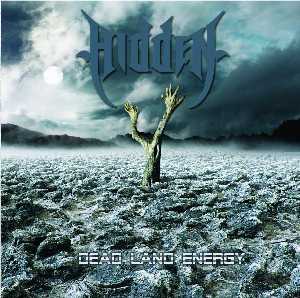
HIDDEN: "Dead Land Energy"

Hidden’s cover artworks have never really looked like black metal albums, and neither does the band sound like traditional black metal to almost any extent: on their third offering Dead Land Energy, I’m getting minor vibes of Darkthrone, especially when it comes to the vocal output reminiscent of Under a Funeral Moon, but other than that we’re dealing with quite an experimental effort combining a lot of varying influences from different genres.

Production-wise, Dead Land Energy sounds almost sludgy, even if bass guitar isn’t in so prominent role in this rather lo-fi soundscape - but still the atmosphere is murky in a sludgy way. The musical styles keep shifting even within individual songs:  from relentless blast beats and malicious tremolo picked sawing to psychedelic and almost happy sounding middle sections with some bird samples in the background and occasional epic guitar solos. There’s also a bunch of doom metal elements, not to forget the synths and some death and thrash metal and...

Yeah, Dead Land Energy is a diverse record - perhaps even a bit too much so that it loses its focus a little and doesn’t always sound so coherent. The songs - all relatively short bursts - do flow from track to another seamlessly but at times the weirdness seems like rather random jamming with not-that-mindblowing melodies. The record does take its time to open, and not until my fifth spin or so I’m truly starting to digest and appreciate this 44-minute whole.

It would be unfair to rate Dead Lang Energy poorly, that’s for sure. If you’re into unusual sounding blends of styles and don’t require polished sound from your music, Hidden’s newest album is definitely worth checking out. Even if not the most interesting effort of this rather high quality beginning of 2011, Dead Land Energy should not be overlooked.

3 / 5

Sunday, February 27, 2011

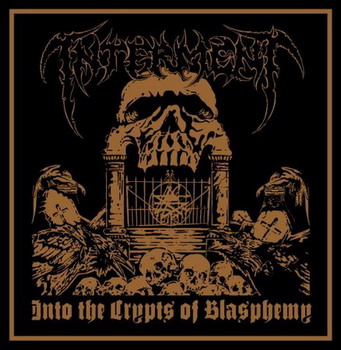
INTERMENT: "Into the Crypts of Blasphemy"

Interment existed already during the Swedish death metal boom in the early 90s, but it wasn’t until last year when their first proper full-length Into the Crypts of Blasphemy was released - so in a way, Interment isn’t just another newly found death metal group playing the same riffs that bands like Entombed and Grave played twenty years earlier...

...but that’s exactly what these veterans are still playing on Into the Crypts of Blasphemy: buzzsaw guitar tone and a murderous overall atmosphere that reeks of death. The production is they keyword here, it’s so killing - causing a feeling of choking - that I can’t but respect it. This is the true soundtrack for graveyards and corpses!

Compositionally, Into the Crypts of Blasphemy offers zero innovation but that is compensated by the sheer power of the instruments that are handled with solid and precise execution. What Interment also realizes to do is to keep the total playing time enough short to retain the music’s intensity throughout. Also, the apocalyptic and kind-of-melodic beginning of ”Sacrificial Torment” is a nice feature that soon after returns to the usual savage torture.

As was the case with the recently reviewed Puteraeon debut, there’s no way of recommending Into the Crypts of Blasphemy for those looking for interesting twists and surprising flavors in their death metal; this is pure old school death metal, made by the old schoolers for the old schoolers. The target audience is narrow but surely devoted and will rejoice what Interment presents here.

3 / 5

Saturday, February 26, 2011

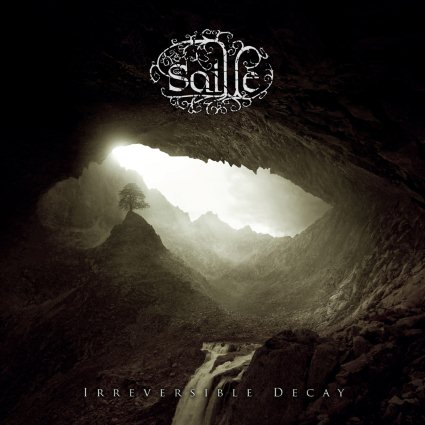
SAILLE: "Irreversible Decay"

Never trust the hype! That’s what comes to my mind after several spins given to Saille’s debut offering Irreversible Decay, but don’t get me wrong, we’re still dealing with such a symphonic black metal album that puts many others in the field to shame.

Saille plays professionally, that becomes clear in the beginning already when the well-played acoustic intro ”Nomen” escorts the album to its first metal blast entitled ”Passages of the Nemesis”, a true sea of tremolo picked riffage where the roughness of rock instrumentation meets the melody of real (!) orchestral instruments. The inclusion of proper orchestral elements is a definite plus, making Irreversible Decay differ from all the cheap synth orchestra black metal bands out there.

Compositionally, the songs are rather diverse and technical, but lacking the spark of originality too. What I’m mostly hearing is Keep of Kalessin combined with some Dimmu Borgir - not that that’s a bad combo, but it does make the album sound a little tame. The tameness and safeness is a problem I have with a lot of modern sounding black metal albums (e.g. it doesn’t matter how fast you play those damn blast beats if they lack all necessary barbarity), so if you don’t mind well produced black metal with modern compositional and productional values, forget what I said above and just enjoy.

There are some true gems among the nine tracks, such as ”Maere” and ”Tephra” which have some of the most grabbing melodies of the bunch, not to forget how much is given space to the orchestral instruments, and it works like a charm. None of the tracks are certainly bad, just somewhat unsuprising. Irreversible Decay is most certainly a positive experience (in spite of all the negativity I gave space for in this review) that all symphonic black metal lovers should look into; for me, a lot more unpredictability would be needed to really impress me, but I’m still enjoying this to a good extent.

3 / 5

Sunday, February 20, 2011

SFERSLAV: "Lyn' za Hmari"

It’s taken a long time for me to get into this folky metal, but nowadays I can truly understand the beauty of even the happiest melodies - mostly thanks to bands like Nokturnal Mortum, Negură Bunget and Temnozor who could be mentioned as similar artists to Sferslav’s new EP entitled Lyn’ za Hmari, though metal is only a minor and occasional element here.

Indeed, the only proper moments of distorted metal guitar are in the background of the Negură Bunget esque title track, other than that and some double bass drumming it’s mostly acoustic instrumentation such as guitars and traditional instruments that dominate the soundscape, not to forget the well performed female vocals that are in the biggest role on ”Zirka-Dusha”. Speaking of which, I can’t help getting a vibe of Blazebirth Hall bands à la Forest and Branikald during the last moments on ”Zirka-Dusha” where a sweet guitar melody is tremolo picked with a clean sound.

Consisting of mere four relatively short songs, Lyn’ za Hmari is over sooner than you realize, and considering the quality of the compositions, I wouldn’t mind hearing a lot more. The professional production makes all the instruments sound perfect, and the ambience is top-notch, from the mysterious aura of the introduction ”Vidkryttya” to the summery melodies on ”U Pamyat Bilih Liley”.

Lyn’ za Hmari is the first proper folk metal release I’ve heard this year, and it sets the standards quite high. A recommendable buy for those who enjoy the bands mentioned in earlier paragraphs. If you aren’t entirely convinced after first listen, force yourself for another spin because these melodies will become pretty damn enchanting eventually.

3.5 / 5

EZAYAH / VALEFOR / ZENITH MAUDLIN: "Passages from the Dark Side"

Passages from the Dark Side presents three demo level atmospheric / depressive black metal bands hailing from Turkey. I’m always open for new discoveries within black metal and Turkish such is quite an obscure area for me, but according to this split, I’m not really convinced.

Ezayah opens the album with a grandiose intro and ”In the Woods” which is the most traditional black metal song on the whole disc with its high-pitched screams, tremolo riffage and (programmed) blast beats. There’s a slight sense of Xasthur’s eeriness in the music as well as Lucifugum’s evilness, but not quite on the same level of quality. The song leaves me a little unimpressed, just passing by as a song that sounds unfinished, mostly due to the cheap drum sound.

Valefor presents depressive black metal to the bone, programmed drums pulsate nicely and a lot more fittingly than on the fast tempos of Ezayah. Vocals are high-range wailings à la Mortualia’s debut and Heartless from China, which might turn off some of the listeners. I, however, think they’re a nice feature despite the somewhat comical style. Compositionally, the two long songs bring nothing out of the ordinary for a depressive / suicidal black metal listener, so you are not losing much if you don’t hear these simple songs where distorted guitar melodies are picked at slow pace with some lead melodies on top.

The best of the three bands is saved to the end when Zenith Maudlin kicks in with the cavernous funeral doom atmosphere on ”Murdered Within Nothingness”. I’m getting minor vibes of Elysian Blaze but this is something more chaotic, but definitely well done. On top of the murderous low-tuned guitars and murky percussion screeches some violent noises, until an ambient section takes hold for a while. ”After Poisoned Seven Minutes” leans, unfortunately, toward a more general depressive black metal sound, but is nonetheless above the other two bands on the split.

I can’t say I would recommend Passages from the Dark Side to many unless you’re a hardcore explorer of Turkish black metal. Ezayah’s and Valefor’s appearance here leaves me cold, but Zenith Maudlin on the other hand impresses. Still, as I have to give an overall star rating for the split, the score remains low.

2 / 5

VOM FETISCH DER UNBEIRRTHEIT: "Psychohygiene"

After minor delays, Vom Fetisch der Unbeirrtheit’s debut was unleashed in the beginning of this year, offering two discs of pure audial insanity - not to forget the physical package in which the music comes: this hardcover digibook with 26 pages of intricate artwork plus lyrics is one of the sweetest ways I’ve seen an album presented in a while.

To the actual musical content, Psychohygiene is indeed divided into two discs of which the first presents the black metal, not far from the oddness and horror of Blut Aus Nord but in more natural sound, meaning that the drums are real and the whole sound in general is more primitive. The songs are mostly long and meandering but never pretentiously technical, e.g. the convulsing riffing in the beginning of ”Anschließendes Verstummen” that is still - in some weird way - soothing instead of meaninglessly random. Some ambient parts are to be found from this disc, most prominently on the disc highlight ”Non-Narkotikum” that has a five minute breakdown in the middle until it rises to grandiose guitar lines and blast beats again.

The second face of Psychohygiene comprises audial experimentation in the form of ambient and noise - and all kinds of weird experimenting with e.g. piano and techno beats on ”Imperativ: Kategorische Zerstörung, XIIIx losgelöst”. This side of the album might logically receive negative response from the black metal crowd, but I find this style fitting to the band, considering the filthiness of the first disc as well. We are not talking about any masterpiece tracks here, but songs like the traditional, highly distorted and rumbling ”Psychogramm” noise track, and the disturbing sounds à la Will Over Matter on ”Du magst solche Szenen” are pure pleasure to my ears.

Vom Fetisch der Unbeirrtheit and Psychohygiene came out of nowhere but made their way to the top list of 2011 already, and I could see this album among the best come end of the year. Wholly recommended for those who enjoy a lot of dirtiness and chaos in their black metal and don’t mind the experimentation either.

4 / 5

PUTERAEON: "The Esoteric Order"

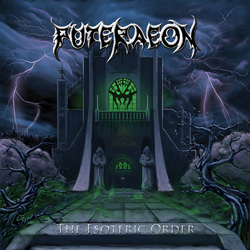
No matter how many generic death metal bands are out there doing what Grave and Entombed did twenty years ago, I find Puteraeon’s debut full-length The Esoteric Order a crushing album that indeed doesn’t offer anything new, but satisfies the needs of old school Swedish death metal fans - that is, if you’re not stuck with only the originals.

The Esoteric Order offers a heavy load of 13 tracks laden with  rumbling - sometimes almost doomy - guitar sound and generally slow or mid-paced battering. Tracks like ”Whispers of the Dead” are exceptions when it comes to the tempo, that example having one of the only fast blast beats of the whole 56-minute package.

There’s almost nothing innovative about the riffs that follow the path of their influences very closely, and while I respect the loyalty to the original style, one hour is a tad too long running time. ”The Innsmouth Insanity” compensates a bit, being an instrumental that includes some evil clean guitar sound too. Still I think that reducing maybe three or four songs would have made a more enjoyable and less dulling experience.

In spite of all the negativity expressed in the paragraph above, that doesn’t take away the sheer power of the riffs. Also, the production is top-notch, even if some old schoolers could complain about its modern touch. All this, plus the Lovecraftian artwork that is to my taste, makes The Esoteric Order a nice album that I will be spinning every now and then in the future, so that three stars are certainly deserved. 

3 / 5

KARG: "Von den Winden der Sehnsucht #2"

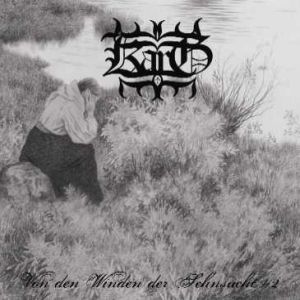
Ambient black metal, they say about Karg’s second full-length Von den Winden der Sehnsucht #2. But what I mostly hear is reverberating black metal leaning on both melancholy and harshness, not much unlike Horn, and quite an incoherent 78-minute journey the album most definitely is.

Don’t get me wrong, V.Wahntraum knows what he’s doing here with his meandering black metal where melodic lead guitars meet almost technical song progressions in a lo-fi production, but when a dominant number of the songs run for over 15 minutes, it becomes clear that almost none of the riffs are truly outstanding and worth of such long lengths: hence I always find myself slightly bored halfway through the 16-minute second track ”Wahntraum”. There’s a gaping hole in the album’s coherency, resulting in a prolonged whole where different riffs are fired constantly, reminding me of an impatient ADHD child who can’t focuse on one thing at a time and build something good out of it.

The musical style remains the same from the beginning to the end: occasionally clean guitar sound is in more prominent role (as in the highligh track ”Ruhe Unsanft” that also incorporates some violin), sometimes a few samples are added to the mix inside songs’ transitions from a part to another, and V.Wahntraum does do good job with his raspy, convincing screams.

Here’s to hoping that some day Karg manages to build a stronger whole off the elements he’s using at the moment, because there’s surely potential in there. But Von den Winden der Sehnsucht #2 doesn’t really lure for replay, both because of the overall playing time and the lack of inspired riffage - or perhaps I’m just too busy to give the album enough time to sink in. If that’s the case, then you better give this album a great deal of time.

2 / 5

Thursday, February 17, 2011

IMPIETY: "Advent of..."

Now that Impiety’s deal with Agonia Records is over - I suppose - after the release of last month’s Worshippers of the Seventh Tyranny, this Singaporean war machine has signed to Pulverised Records, and already offers a three-song extended play entitled Advent of... that shows the band’s return to the more common bestial black/death war metal after the experimental one-song album from the beginning of this year.

So if you are even vaguely familiar with Impiety’s back catalogue and in spite of the recent lineup changes, you know what to expect from this EP: pure murder executed with unbridled battering by the drummer Atum and a lot of violent power chord riffage by Guh Lu and Eskathon, all three being new members since last year, and only Shyaithan remaining as an original member of the group.

Tempo is kept at high which is fitting for an EP release where it’s not ultimately necessary to slow down at all. Despite the rapidity, the songs span from 6 to 8 minutes, so there’s a lot of riffs to digest. ”Blood Ritual Defamation” does nod a little towards the recent full-length with its occasional midpaced ritualistic stance with a flanger effect on the guitars. Another similarity to the full-length is the production that is very dry and perhaps lacking a little punch of bass, but it’s very enjoyable in its own way.

If a mixture of the style of Terroreign and the production of Worshippers... sounds good to you, then do yourself a favor and get hold of this EP. It’s really nothing out of the ordinary but I find it enough ass kicking to deserve multiple listens now and in the future. A whole full-length in this style could be too much of the same, but in EP format things work very well.

3 / 5

FEN & DE ARMA: "Towards the Shores of the End"

It hasn’t been but a couple of weeks when Fen’s second full-length Epoch was in my hearing and now it’s already time to get exposed to some more of this group’s atmospheric blending of black metal and post-rock - and I don’t complain! The other side of Towards the Shores of the End consists of De Arma, a new project of A’s, better known from Armagedda and Lönndom.

The four tracks provided by Fen deliver pretty much nothing surprising for those who are familiar with the band already: a heavy dose of melancholy and natural sound, combining the harshness of black metal and the fragile sound and song progressions of post-rock. Fen might be slightly more in-your-face on the split than on any previous recording of theirs: the war rhythms in the beginning of ”Ageless Thenody” sound for a while like a different band until the melodies kick in and ”Soilbound” has tendencies to a more chugging(-kind-of) sections. The title track builds up slowly from the beginning where only bass guitar, toms and kick drums follow a certain pattern. A lush acoustic instrumental of ”Bereft”, deriving from the debut album, is added to the package as well, and what a sweet piece of acoustic guitars, piano and minimal percussion it is.

De Arma offers a more traditional take on mesmerizing lo-fi black metal, and the three tracks could be divided into two categories: ”Crimson Waters Ebbing the Shores” and ”From Horizon to Oblivion” are clearly rooted in the sound of Armagedda where the mostly tremolo-picked riffs have a somewhat evilish tendency, not to forget the similar reverberating guitar tone, and the Lönndom esque odd clean vocals. The 9-minute centerpiece ”Noemata”, on the other hand, could pretty much be a Fen track because the sound is extremely similar, from the vocals to the melodies and overall atmosphere. Due to its identical sound in comparison to Fen, I find the track the least impressive of the whole bunch though it’s still pretty well done, no question of that.

Towards the Shores of the End presents two great bands of which the other has already received truly deserved recognition, and of which the other is still a new name that will hopefully continue in the vein of the two more original songs in the future. Definitely a recommendable purchase for any Fen lover and for fans of A’s other projects, now that Armagedda has been buried for a long while already.

4 / 5

DRAUMAR: "Ein Wintermärchen"

On his second full-length offering Ein Wintermärchen, Draumar most certainly doesn’t break any boundaries when it comes to winter themed ambient black metal, no; the influences of Vinterriket and of course Burzum shine through, but the album is still quite an enjoyable experience even in all its unoriginality.

Ein Wintermärchen
is very, very rich in ambient: lush ambient passages - comprising synths, pianos and whatnot - dominate the record and, in fact, it could almost be said that the album is genre-wise ambient with minor black metal elements. It’s not until the six-minute ”I” is gone when the first sounds of lo-fi drums, tremolo-picked guitars and screams (delivered by the mind behind Elffor) appear in ”II”, and just for a minute or so until the dreamy ambient soundscapes are there again to carry the song to the end.

There’s a slight taste of New Ageish sound when it comes to the ambient but it’s bearable. My personal preference would be something less pompous and more minimal, something not this well produced, but I can’t escape the fact that most of the melodies are still captivating and even memorable, which is an achievement in a genre so crowded.

The quality of the music stays steadily good throughout so that there aren’t any annoyingly weak links in the whole, so all in all I find Ein Wintermärchen a successful and worthy album to check out if you prefer a lot of ambient in your wintry black metal. Not hundred percent my cup of tea, but easily above your average ambient black metal album.

3 / 5

AURVANDIL: "Ferd"

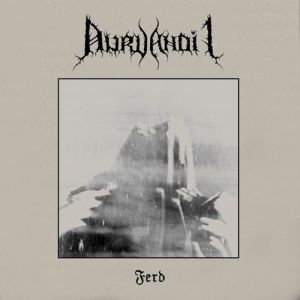
Aurvandil is a prolific atmospheric one-man black metal project of its eponymous member. Ferd is considered an EP though it runs for over 42 minutes during which the release presents wintry, hypnotizing black metal throughout, along with some minor folk influences of the first and last tracks (”Peregrination I” and ”Peregrination II”).

Whereas the music is prominently convincing in the melody department - especially when it comes to the simple synth mats contributed by Evilfeast that work like magic and e.g. the beginning of ”Through Hordanes Land” with all those cellos and acoustic guitars - I can’t help feeling that there’s a big lack of coherency in the production, much thanks to the programmed drums that don’t fit in. At all. It’s always such a headache to hear promising compositions that are ruined by cheap solutions in the final execution. Or how exactly am I supposed to get into the wintry mood when all I can think of is someone creating drum patterns by clicking at his ’Drumkit From Hell’ software in his bedroom?

Well, as implied earlier, Aurvandil does occasionally know how to create something awesome, one of the clearest examples being the ending of ”Still He Walks" where on the top of the sweet tremolo picked melancholic riff appears some well-done lead melodies. Also, the folkish intro and outro tracks bring some originality to the mix, which is nice. Vocals are in the usual raspy and somewhat high-pitched range, nothing to complain about those either.

Ferd doesn’t quite deliver the goosebumps inducing harsh coldness of Paysage d’Hiver; instead, the modern sound - mostly caused by the mechanized battering - has only a negative impact. The riffs alone are worth hearing nonetheless, and they’re given a nice amount of repetition in these long tracks, so from that perspective Ferd is an okay album that simply has some too evident symptoms of a bedroom project. Hence Ferd isn’t the record I’ll put on a chilly winter day but I might be returning to this album occasionally because of some of the good ideas presented therein.

2.5 / 5

Friday, February 11, 2011

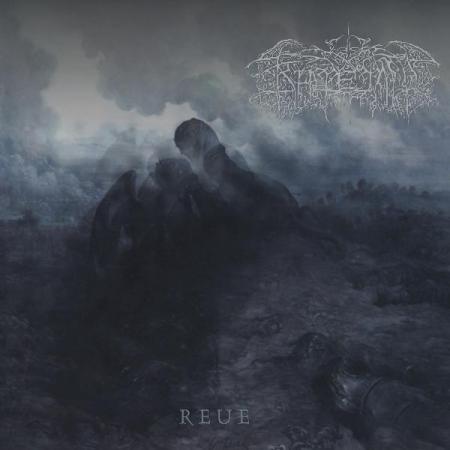
KÄLTETOD: "Reue"

Germany and depressive black metal, a combo so common. While some gems like Nyktalgia keep the German standards high, most often the result is fairly poor and way too predictable, but luckily Kältetod’s second full-length Reue is at least somewhere in the middle grounds, having its unfortunate symptoms of German DSBM mediocrity yet still offering a fair deal of riffage that is enough interesting.

The music on Reue balances between hazy melancholic melodies, eeriness and occasional aggressiveness. A lot of distortion is to be expected, both on the guitar sound as well as on the vocals. The quality of the music varies a lot: songs like ”Das Lächeln der Verwesung” and ”In die Glut der Weltenseele” are less impressive of the bunch, while such tracks as ”Nur vom Eiswind noch getragen” - close to the sound of old Katatonia -  and ”Zermürbt durch Reue” with its ingenious riffing I’m happy to listen to again and again.

For the most part, it’s the muffled production - that is for an unknown reason so damn common in depressive German black metal - that hinders the music on Reue from rising to greatness: in different settings with proper dynamics, I’m sure this music would have had a bigger impact on me. Just give some more space to those drums, some more balls to the muffled guitar sound and lighten the distortion on the vocals and you’ve got a much more impressive album.

All instruments are executed with steady playing - even if there’s some melodies played out of tune but it’s only charming - and no surprise there knowing that these songs were composed between 2004 and 2006 and recorded between 2007  and 2009, so they’ve been in the works for a long, long time. For such a lengthy time span, one could expect something more, but Reue is nonetheless an okay piece of depressive black metal. Nothing outstanding, but a worhty investment if you’re a hardcore fan of the style.

2.5 / 5

SHROUD OF DESPONDENCY: "Dark Meditations in Monastic Seclusion"

Shroud of Despondency has already been around since the end of last century but has always remained obscure, and I’m hoping that will change when their second album Dark Meditations in Monastic Seclusion gets some proper promotion, because the band is definitely worth of the attention of all those into black metal with largely progressive or experimental tendencies.

Dark Meditations in Monastic Seclusion is one hell of a 57-minute ride through a plethora of influences I’m able to spot therein, from the acoustic folky beginning track ”Seeing One Last Ray of Light” and ”Flicker of the Ardent Light” that sound very close to Agalloch, to the fittingly named ”Sullen Murmur Oppressive Stillness” with its maniacal Shining influences. Not to forget all those Drudkh melodies on ”Sybil” with the ambience of Godspeed You! Black Emperor in the background... And what's best, the band sounds natural and plays without any technical gimmicks, despite the fact that these aren’t really simple songs, both compositionally and sound-wise.

The production is warm and it’s a pleasure to hear so detailed acoustic guitar sound, for instance. There’s only a few glitches I can mention of the album, like the clean vocal delivery of Michale Jurek that doesn’t always go so hand in hand with the beautiful music behind. Nothing to complain about the growls or screams, anyhow. Another thing that I could see slightly reducing the overall score of the album is the amount of influences it takes from other groups out there, perhaps lacking its own identity a little. But when it’s all performed so well, I don’t see this as a major problem.

Dark Meditations in Monastic Seclusion is definitely worth checking out if you like compromises in your black metal - if black metal is a fitting genre for this at all. Even if not THE most impressive album of the year so far, remembering e.g. Fen’s Epoch, this album is a clear example of a record that proudly stands above the masses of mediocrity.

3.5 / 5

Wednesday, February 9, 2011

STORHET AV MORKE: "Grandeur of Eternal Cold"

Ice cold black metal is the name of the game on Storhet av Morke’s long-delayed debut offering Granduer of Eternal Cold. Morbid, the sole member behind this Russian project, has created a nice yet not entirely convincing 37-minute whole here.

Shrilling guitars dominate the music that is backed up by programmed drums reminiscent of Hate Forest, playing mostly either rapid or slower blast beats. The cold monotony of programmed drums works in black metal sometimes, but here I find the programming slightly poor, especially when it comes to the tom fills, so that real drumming would have improved the album a lot. Black metal shrieks are delivered the usual way, nothing to complain about.

Riff-wise, we are not dealing with any masterpieces, just pure piercing simple riffage that flows nicely but indeed lacks a spark of originality. Hence all the six first tracks kind of go by and you never notice any proper details, and it’s not until the outro when things suddenly change: ”Outro” is a 11-minute melancholic ambient track comprising simple string and piano melodies - this one’s my personal favourite off the album and it’s the first time when I’m really focused on the music on Grandeur of Eternal Cold.

All the black metal alone on the album wouldn’t have made a truly successful release, but luckily the outro compensates a bit, so that I can give Grandeur of Eternal Cold a decent rating. Here’s to hoping that next time we get to hear more grabbing riffs and perhaps real battering.


2.5 / 5

Friday, February 4, 2011

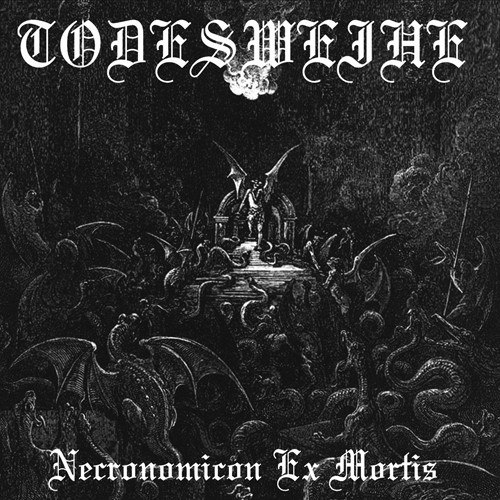
TODESWEIHE: "Necronomicon Ex Mortis"

Necronomicon Ex Mortis showcases 13 tracks of Todesweihe’s back catalogue, which means almost 70 minutes of basic German underground black metal with no compromises. Sounds interesting? If not, there’s no reason to continue reading, as I’m sure that this kind of stripped-down simplicity with no innovation whatsoever is a thing you either really like or have no interest in at all.

First up is the demo Nachtmahre dating back to 2004, offering four tracks of hateful black metal with relatively warm production and a short interlude with clean guitars. Drums batter a stable blast beat almost throughout, though ”Mit einem Herzen voller Verachtung” and ”Das Sterben” realize to provide even some slower variation to the game too, the former being a highlight of the demo.

Nachts am alten Friedhow, an EP from 2008, follows next with two songs of which the first, ”Return of the Necromancer”,  differs a little from the other songs on the compilation, as the drums are programmed and the whole sound is overall clumsier, but it’s actually charming and somewhat refreshing because of its difference in comparison to the other songs. "Das Schloss", taken from the 2010 seven inch split with Leichengott is another highlight of the CD with its most ingenious riffs of the whole bunch.

As Flittermice as Satans Spys, a Darkthrone cover - surprise surprise - is done well but has little worth. Yeah, I’m not the biggest lover of covers even in general, especially when it comes to Darkthrone, Burzum &co covers that have been done a million times in the past. Four live tracks end the compilation, the sound being really harsh, definitely not for audiophiles. There’s still some charm in these raw pieces - that are most likely recorded from the audience - as the high-pitched raspy screams sometimes overwhelm the whole picture with their tortured sound.

For lovers of the German underground, Necronomicon Ex Mortis is a logical release to buy to get to hear most of Todesweihe’s previous output; for a general black metal listener that might want to hear even something refreshing, better avoid this. I’m leaning toward a decent rating: while the band certainly knows what they’re doing, truly sweet moments are too infrequent here to really arouse my interest to listen to this again and again.

2.5 / 5

Tuesday, February 1, 2011

FOLGE DEM WIND: "Inhale the Sacred Poison"

Inhale the Sacred Poison is essentially made by the book - code666’s book. Folge dem Wind plays meandering mid-tempo black metal with a firm grip on avant-garde music, a style very common to the label’s roster, and Inhale the Sacred Poison is pretty much on the same level of quality as the others, meaning that it’s a very enjoyable piece.

There’s a lot of odd dissonance in the melodies throughout the songs that run for six minutes on average, but the band knows when to give something easier to the listener too, such as the jazzy saxophone lines in the end of ”Behind the Grey Veil” and ”Through the Eye of the Immortal” where the reciprocity of the two repetitive guitar melodies works like a charm, a definite highlight moment on the album. Vocal duties are handled well as gurgling mid-range screams, and there’s not much to complain about the production either that is neither too polished nor too raw.

But there are moments when the band seems to be stagnated (”Awakening in Unity” for instance), as if not knowing where the songs should progress into, hence marching in place a tad too long sometimes. It is to be remembered, though, that Inhale the Sacred Poison isn’t an easy album at all, so that multiple listens are required if you want anything out of this record. Perhaps I’m not fully acquainted with the album yet and only because of that find some parts of the record unmemorable - who knows.

All in all, Inhale the Sacred Poison always leaves me satisfied afterwards. Although it’s not the most consistent avant-garde black metal album out there, all the superb moments on the album - that keep getting stuck in my head - compensate enough. Inhale the Sacred Poison deserves a favorable rating and the attention of those into somewhat modern experimental black metal.

3.5 / 5